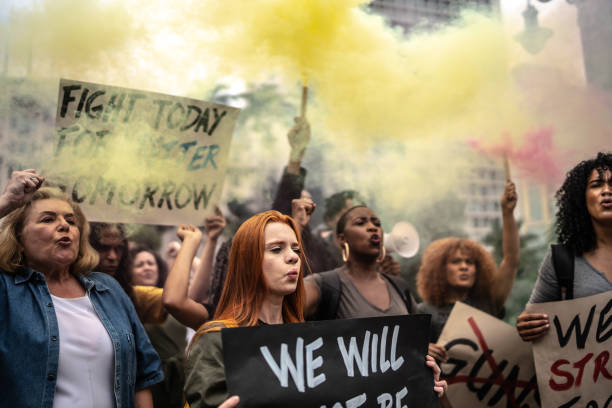
Gender Violence took center stage in South Africa’s capital on Tuesday as hundreds of women and civil society activists gathered in Pretoria to demand immediate and concrete government action against the country’s escalating gender-based violence crisis.
The protest, held near the Union Buildings, brought together women’s rights organizations, students, labor groups, and survivors of abuse. Demonstrators said the scale of violence against women and girls has reached emergency levels, accusing authorities of failing to protect victims and hold perpetrators accountable.
Placards reading “Enough Is Enough,” “Stop Killing Women,” and “Justice for Survivors” filled the streets as protesters marched peacefully, calling for stronger laws, better enforcement, and sustained funding to combat gender-based violence and femicide.
What Happened at the Pretoria Protest
The demonstration began early in the morning, with participants assembling at designated points across Pretoria before converging near key government buildings. Protest leaders said the gathering was part of a coordinated national effort to pressure policymakers into treating gender-based violence as a priority issue rather than a recurring headline.
Organizers described the protest as non-partisan and inclusive, aimed at amplifying the voices of women who feel unheard despite years of promises and policy commitments. Chants echoed through the city as protesters demanded justice for victims whose cases remain unresolved.
Several women lay silently on the ground for minutes at a time, symbolizing lives lost to gender violence across the country. Others held photographs of victims, underscoring the human cost behind the statistics.
Why Gender Violence Remains a National Crisis
South Africa continues to record some of the highest rates of gender-based violence globally. Police data and independent studies have repeatedly highlighted alarming levels of assault, rape, and femicide, with women and girls disproportionately affected.
Activists argue that while awareness of gender violence is widespread, action has lagged behind rhetoric. Many cases never reach trial, and survivors often face barriers when reporting abuse, including fear of retaliation, stigma, and a lack of faith in the justice system.
Protesters in Pretoria said the persistence of these conditions shows that current interventions are insufficient. They called on leaders to acknowledge gender violence as a national emergency requiring sustained political will and coordinated action.
What Protesters Are Demanding
Demands raised during the protest focused on accountability, prevention, and survivor support. Key calls included:
- Declaring gender-based violence and femicide a national disaster
- Strengthening bail and sentencing laws for violent offenders
- Ensuring consistent funding for shelters and survivor services
- Improving police training and victim-centered investigations
- Speeding up court processes for gender violence cases
Activists stressed that these measures are not new but have remained largely unfulfilled. They said the Pretoria protest was intended to send a clear message that incremental change is no longer acceptable.
Voices From the Ground
Several speakers addressed the crowd, including survivors who shared personal experiences of navigating the justice system. One activist told protesters that reporting abuse often leads to secondary trauma due to insensitive handling of cases.
“You survive the violence, only to be failed again by the system,” she said, drawing applause from the crowd.
Youth leaders also played a visible role, emphasizing the impact of gender violence on young women and girls. Student organizations said campuses are not immune, calling for stronger protections and reporting mechanisms within educational institutions.
Official Response and Government Position
At the time of the protest, there was no immediate on-site response from senior government officials. However, authorities have previously acknowledged gender-based violence as a serious national concern and committed to long-term strategies aimed at prevention and accountability.
Government departments have cited existing frameworks designed to address gender violence, including national action plans and interdepartmental coordination efforts. Critics, however, argue that these initiatives lack measurable outcomes and sufficient funding.
Protest leaders said continued public pressure is necessary to ensure commitments translate into real-world protection for women and girls.
Public Reaction and Social Media Response
The Pretoria protest quickly gained traction on social media, with hashtags related to gender violence trending locally. Images and videos of the march were widely shared, drawing both support and renewed debate.
Many users expressed solidarity with protesters, praising the peaceful demonstration and calling for unity across political and social lines. Others questioned the effectiveness of repeated protests, prompting activists to respond that public mobilization remains a crucial tool for accountability.
Online discussions also highlighted the emotional toll of gender violence, with survivors sharing stories and urging authorities to listen.
What Happens Next
Organizers said the Pretoria protest is part of a broader campaign that will continue until tangible progress is made. Planned actions include petitions, legal advocacy, and community-based education initiatives aimed at prevention.
Activists also signaled their intention to monitor government responses closely and to escalate demonstrations if demands are ignored. They stressed that the fight against gender violence requires sustained attention, not symbolic gestures.
For many participants, the protest was not just about policy but about reclaiming safety and dignity in daily life.
Conclusion
The women’s protest in Pretoria has once again placed gender violence at the forefront of South Africa’s national conversation. While demonstrations alone cannot end abuse, organizers believe they play a vital role in keeping pressure on institutions responsible for protecting citizens.
As protesters dispersed peacefully, their message remained clear: without urgent, decisive action, gender violence will continue to claim lives and undermine the country’s commitment to equality and justice.
Whether the demands raised in Pretoria lead to meaningful change now depends on how authorities respond — and how long the public remains willing to accept inaction.