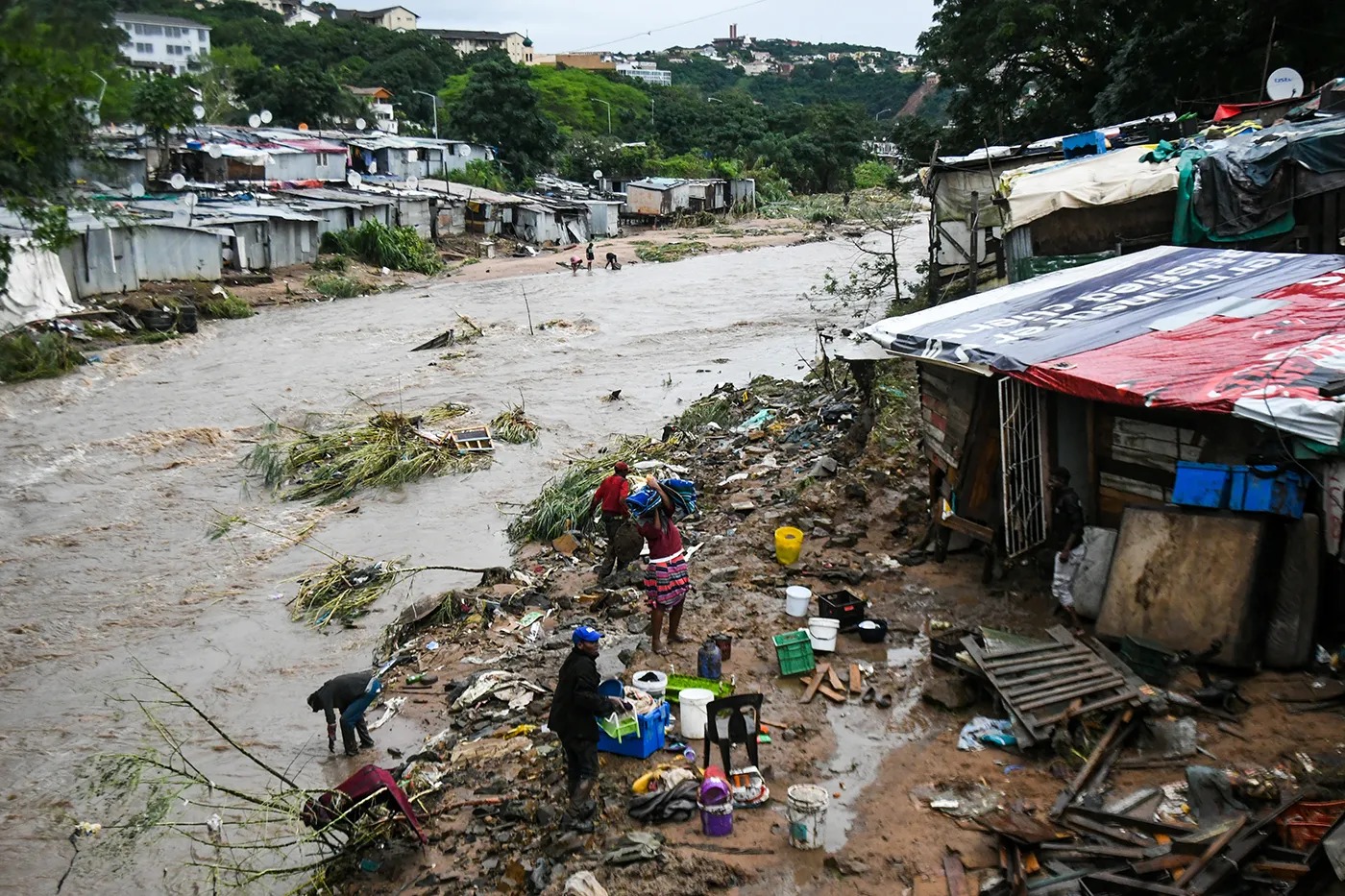
Cape Flooding has displaced more than 5,000 residents across Cape Town after days of intense rainfall caused rivers to overflow, homes to collapse, and entire neighborhoods to become submerged, according to South African disaster management authorities. The floods, among the most severe seen this winter season, have renewed concerns about climate change, urban planning failures, and the growing vulnerability of low-income communities.
City officials confirmed that emergency shelters were activated overnight as floodwaters inundated informal settlements and low-lying suburbs, forcing families to evacuate with little warning. Relief operations remain ongoing as weather forecasters warn that additional rainfall could worsen conditions in the coming days.
What Happened?
Cape Town was hit by persistent and heavy rainfall over several consecutive days, overwhelming stormwater drainage systems and causing rivers, canals, and retention ponds to overflow. The situation deteriorated rapidly as water levels rose, flooding homes and cutting off access roads.
Areas most affected include parts of Khayelitsha, Philippi, Gugulethu, and the Cape Flats, where informal housing structures are particularly vulnerable to flooding. Many residents reported waking up to water rushing into their homes during the early morning hours.
City disaster management officials said rainfall intensity exceeded seasonal averages, leaving little time for preventative measures.
Scale of Damage and Displacement
According to preliminary assessments:
- Over 5,000 people displaced
- Hundreds of homes either partially or completely destroyed
- Major roads flooded, disrupting emergency access
- Electricity and sanitation services affected in multiple areas
Temporary shelters were established in community halls, schools, and municipal buildings. Aid agencies and city services are providing food parcels, blankets, mattresses, and medical assistance.
“This is a humanitarian emergency,” a municipal spokesperson said. “Our teams are working around the clock to support displaced residents.”
Emergency Response and Official Statements
The City of Cape Town activated its disaster response protocols, deploying emergency personnel, water pumps, and social development teams to affected zones. Officials emphasized that safety remains the top priority as unstable structures pose ongoing risks.
Authorities urged residents in flood-prone areas to remain vigilant and follow evacuation instructions if conditions worsen.
“We are monitoring weather updates closely,” the city said in a statement. “Residents should avoid flooded areas and report emergencies immediately.”
Climate Change and Extreme Weather Warnings
Climate experts say the Cape Flooding crisis reflects a broader trend of increasingly extreme weather events linked to climate change. Warmer atmospheric temperatures allow air to retain more moisture, resulting in heavier rainfall over shorter periods.
“This type of flooding is no longer an anomaly,” said a climate researcher at a South African environmental institute. “Climate change is amplifying rainfall intensity, and urban areas are struggling to cope.”
Scientists warn that without significant investment in climate adaptation, similar disasters will become more frequent and destructive.
Infrastructure Under Pressure
Cape Town’s aging stormwater infrastructure has come under renewed scrutiny. While some systems were designed decades ago for milder rainfall patterns, they are now struggling to cope with climate-driven extremes.
Floodwaters damaged roads, drainage channels, and sewage systems, increasing the risk of contamination and waterborne diseases. Health officials are monitoring conditions in shelters and affected neighborhoods.
Transport disruptions were reported on several arterial routes, complicating rescue and relief operations.
Impact on Vulnerable Communities
Low-income and informal settlements bore the brunt of the flooding. Many residents live in flood-prone areas due to limited access to safe and affordable housing.
For displaced families, the loss extends beyond physical structures. Essential documents, school materials, appliances, and personal belongings were swept away.
“We lost everything in one night,” said a resident from Khayelitsha. “We don’t know how we will start again.”
Community leaders stressed that repeated flooding traps residents in a cycle of rebuilding and loss.
Humanitarian Concerns in Shelters
Conditions in temporary shelters remain challenging. Aid workers reported overcrowding, limited privacy, and growing emotional distress among displaced residents.
Children, elderly individuals, and people with disabilities are among the most vulnerable. Social workers and healthcare providers have been deployed to address immediate needs.
Non-governmental organizations have also stepped in, calling for donations and long-term support.
Calls for Long-Term Solutions
Urban planners and environmental groups argue that emergency relief alone is insufficient. They are urging authorities to invest in:
- Climate-resilient housing
- Improved drainage and stormwater systems
- Early-warning and evacuation systems
- Safer land-use planning
Experts say relocating high-risk settlements and upgrading infrastructure must become national priorities.
Economic and Social Costs
Beyond humanitarian impacts, Cape Flooding carries significant economic costs. Repairing damaged infrastructure, providing emergency housing, and restoring services will require substantial public funding.
Businesses in affected areas have also reported losses due to closures and disrupted transport.
Analysts warn that climate-related disasters could increasingly strain municipal budgets if preventative measures are not implemented.
What Happens Next?
Weather services forecast continued rainfall, prompting authorities to maintain heightened alert levels. Damage assessments are ongoing, and displaced residents may remain in shelters for weeks.
Officials said rebuilding efforts will begin once conditions stabilize, but warned that recovery will take time.
Conclusion
The latest Cape Flooding disaster has laid bare the growing risks facing Cape Town in a warming climate. With thousands displaced and infrastructure under strain, the floods serve as a stark reminder that extreme weather is no longer a future threat but a present reality.
As South Africa grapples with the consequences, pressure is mounting on policymakers to move beyond emergency response and commit to long-term climate resilience strategies.