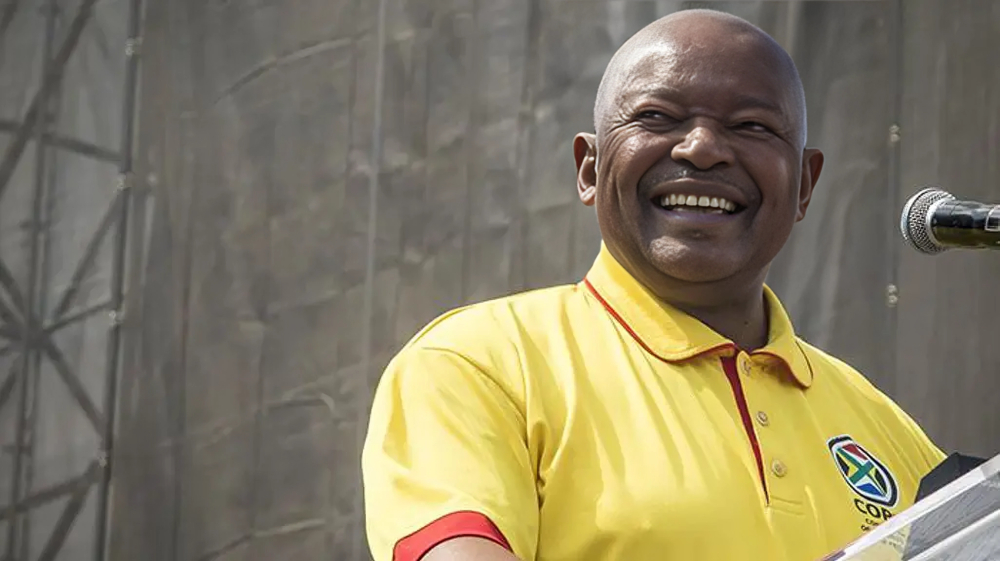
Lekota Death has been confirmed following the passing of Congress of the People (COPE) co-founder and long-time leader Mosiuoa Lekota, who died aged 77 in a Johannesburg hospital in the early hours of Wednesday morning. The veteran politician, former Defence Minister, and first Premier of the Free State had reportedly been battling illness for some time. His death marks the end of a significant chapter in post-apartheid South African politics.
South Africa has lost one of its seasoned political figures whose career spanned the anti-apartheid struggle, democratic transition, and modern parliamentary opposition politics.
What Happened?
According to party officials from Congress of the People, Lekota passed away peacefully at a Johannesburg medical facility after a prolonged illness. While details surrounding the exact cause of death have not yet been formally disclosed, close associates confirmed that his health had deteriorated in recent months.
Lekota had reduced his public appearances over the past year, stepping back from frontline political activity as his condition worsened. Party insiders indicated that he had been receiving ongoing medical care prior to his death.
His passing was confirmed early Wednesday, prompting tributes from across South Africa’s political spectrum.
A Life Rooted in the Anti-Apartheid Struggle
Born in 1948 in the Free State province, Mosiuoa Lekota became politically active at a young age. He joined liberation movements during the height of apartheid and was later imprisoned for his activism.
Lekota spent several years on Robben Island during the 1970s, where many anti-apartheid leaders were incarcerated. Those years shaped his political philosophy and solidified his commitment to democratic governance.
Following his release, he continued organizing within civic structures aligned with the broader liberation movement, contributing to mobilization efforts during one of the most volatile periods in South Africa’s history.
From Premier to Defence Minister
With the arrival of democracy in 1994, Lekota transitioned from activist to statesman. He became the first Premier of the Free State province, serving during the formative years of South Africa’s democratic government.
His leadership style was widely described as firm yet pragmatic, focusing on administrative stabilization during a complex political transition.
Later, he was appointed Minister of Defence under President Thabo Mbeki. He served in that role for nearly a decade, overseeing military transformation and regional peacekeeping participation.
As Defence Minister, Lekota played a key role in redefining South Africa’s defence posture in the post-apartheid era, balancing modernization with budget constraints.
Formation of COPE
In 2008, political tensions within the ruling party led to a dramatic split. Lekota emerged as one of the central figures in the formation of Congress of the People (COPE), a breakaway party that positioned itself as an alternative voice in national politics.
COPE’s formation was one of the most significant political realignments in post-1994 South Africa. In its debut national election, the party secured notable parliamentary representation, signaling public appetite for broader political competition.
Though internal challenges later affected the party’s growth, Lekota remained a consistent figure at its helm, advocating constitutionalism, institutional accountability, and multi-party democracy.
Political Reactions Across South Africa
Tributes began pouring in within hours of the announcement.
Leaders from across the political spectrum described Lekota as a committed public servant who dedicated his life to South Africa’s democratic development.
Several political parties acknowledged his role in both the liberation struggle and the strengthening of opposition politics in a young democracy.
Civil society organizations also noted his decades of service, particularly his contributions during the transitional period following apartheid.
His Political Legacy
Lekota’s legacy is complex and layered.
He is remembered not only as a struggle veteran but also as a statesman who was willing to challenge internal party dynamics when he believed democratic principles were at stake.
His decision to co-found COPE reflected his conviction in constitutional democracy and institutional checks and balances.
While COPE’s electoral performance fluctuated over the years, Lekota’s influence remained symbolic of political plurality in South Africa.
Political analysts say his death may prompt renewed reflection on the evolution of opposition politics in the country.
Impact on COPE’s Future
With Lekota’s passing, attention now turns to the future leadership of COPE.
The party had already begun internal restructuring amid his declining health. Senior members are expected to meet in the coming days to outline transitional leadership arrangements and memorial plans.
Political observers note that COPE has faced organizational challenges in recent years, and Lekota’s death could mark a pivotal turning point for the party’s direction.
The coming weeks will likely determine whether COPE consolidates under new leadership or undergoes further transformation.
Public Reaction and National Reflection
On social media, South Africans expressed mixed but largely respectful sentiments.
Some highlighted his liberation credentials and years of public service. Others debated his political decisions, particularly during party realignments in the late 2000s.
However, the overarching tone remained one of national reflection — acknowledging a figure who was present in nearly every major phase of democratic South Africa.
Public memorial details are expected to be announced soon.
What Happens Next?
The government may issue formal statements and potentially coordinate memorial recognition, given Lekota’s service as Premier and Cabinet Minister.
Funeral arrangements are anticipated to involve both party and state elements, though official confirmation is still pending.
Meanwhile, COPE leadership is expected to communicate succession plans and outline how the party will honor its co-founder.
Political analysts believe this moment could reopen discussions about coalition politics and the role of smaller opposition parties ahead of future elections.
Conclusion
The confirmation of Lekota Death closes the chapter on a political life that bridged struggle activism and democratic governance. From Robben Island to Parliament, from Premier to Defence Minister, and finally as COPE leader, Mosiuoa Lekota remained a visible figure in South Africa’s political landscape for decades.
His passing at 77 leaves behind a legacy intertwined with the country’s democratic journey — a reminder of both its turbulent past and its evolving political future.