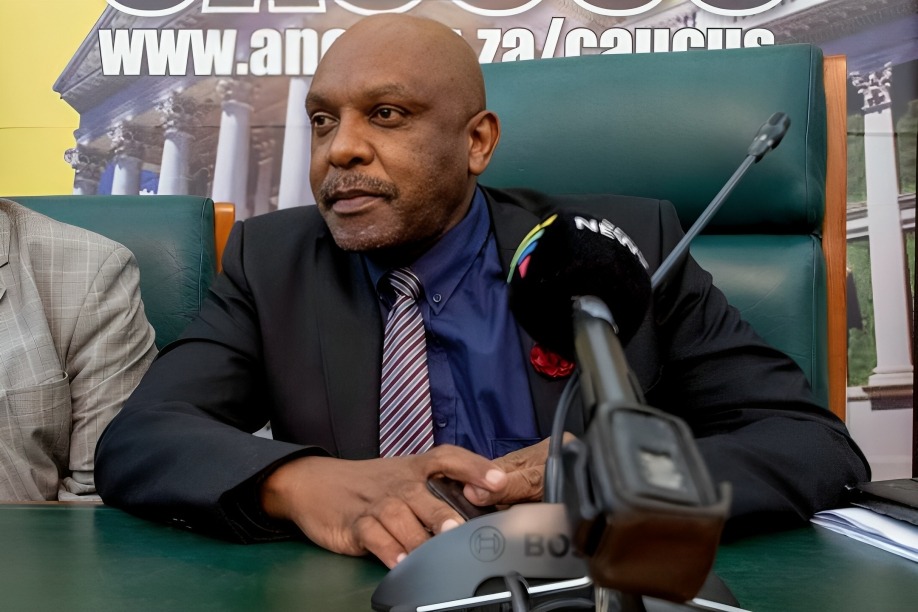
Vincent Smith, a former African National Congress (ANC) Member of Parliament, has become the first politician implicated in South Africa’s state capture scandal to serve time in prison after admitting to corruption and fraud. The conviction marks a significant milestone in the country’s long-running efforts to hold powerful political figures accountable for their roles in alleged corruption networks that operated during the state capture era.
Smith, once a senior parliamentary figure, appeared in court wearing prison orange overalls following a plea agreement with prosecutors. The case has drawn national attention as South Africa continues to pursue justice against individuals involved in state capture schemes that allegedly drained billions of rand from public institutions.
What Happened
The court approved a plea and sentencing agreement between Vincent Smith and prosecutors, resulting in a prison sentence for corruption, fraud, and tax-related offences linked to his relationship with the controversial facilities management company Bosasa.
According to the National Prosecuting Authority (NPA), Smith admitted that he accepted various financial benefits from Bosasa in exchange for political protection and influence during his time as a senior lawmaker.
The plea deal avoided a lengthy trial while allowing the state to secure a conviction in one of the most closely watched corruption cases tied to the state capture investigations.
Smith received multiple sentences across different charges, but because they run concurrently, the effective prison term is seven years.
Connection to the Bosasa Corruption Network
The corruption charges against Smith are tied to Bosasa, a company that received lucrative government contracts particularly from the Department of Correctional Services.
For years, allegations circulated that Bosasa executives bribed politicians and government officials to secure favorable treatment and avoid scrutiny. Investigations later confirmed that several public officials had received cash payments, luxury gifts, and other benefits in exchange for protecting the company.
Smith admitted that he received payments through his private company and benefited from services funded by Bosasa.
These benefits reportedly included:
- Cash payments deposited into accounts linked to him
- Security upgrades at his private residence
- Financial support channelled through his business interests
The court heard that these benefits were not disclosed to Parliament as required by law.
Abuse of Political Influence
During his time in Parliament, Smith served as the chairperson of the Portfolio Committee on Correctional Services. This committee was responsible for overseeing the department that awarded contracts to Bosasa.
Prosecutors argued that Smith used his position to shield the company from criticism and investigations. As committee chair, he had significant influence over parliamentary discussions and oversight processes.
By failing to disclose his financial ties to Bosasa, Smith violated ethical standards expected of public officials and undermined the integrity of parliamentary oversight.
The court described the conduct as a serious breach of public trust.
Tax Violations and Financial Misconduct
In addition to corruption and fraud, Smith also pleaded guilty to tax-related offences involving his company, Euroblitz 48.
Authorities said he failed to declare millions of rand in taxable income over several years. The undeclared income was linked to payments received through business accounts associated with Bosasa transactions.
Financial investigators traced substantial amounts of money moving through Smith’s company, which prosecutors argued were part of the broader corruption scheme.
The tax charges significantly strengthened the prosecution’s case, demonstrating a pattern of financial misconduct over nearly a decade.
Why the Case Matters
The conviction of Vincent Smith is widely considered a turning point in South Africa’s fight against corruption.
For years, critics argued that state capture investigations produced detailed reports but few criminal convictions. Smith’s imprisonment represents the first time a senior political figure linked to the scandal has been sent to jail.
Legal analysts say the case demonstrates that prosecutors are now moving forward with stronger evidence gathered during the years-long investigations into corruption networks.
The case also signals that plea agreements may become a key strategy for securing convictions in complex corruption cases.
Impact on South Africa’s Anti-Corruption Efforts
The ruling has been welcomed by anti-corruption activists who have long demanded accountability for the abuses uncovered during the state capture era.
Civil society organizations argue that the conviction sends an important message that political status will not protect individuals from prosecution.
Government officials have also emphasized that the justice system is committed to restoring public confidence after years of scandals involving government contracts and misuse of public funds.
The National Prosecuting Authority has indicated that more cases connected to state capture are still under investigation.
Public Reaction
News of Smith’s sentencing quickly spread across South Africa, triggering strong reactions from political commentators, civil society groups, and members of the public.
Many observers described the moment as symbolic because Smith appeared in court wearing prison overalls—something rarely seen among high-ranking political figures in corruption cases.
On social media, users expressed mixed reactions. Some praised the justice system for finally delivering accountability, while others argued that many more individuals involved in state capture should also face criminal charges.
The debate reflects broader frustrations about corruption and governance in South Africa.
What Happens Next
Smith’s conviction could pave the way for additional prosecutions linked to the state capture investigations.
Authorities have spent years gathering evidence through inquiries, including testimony from whistleblowers, financial records, and detailed reports about how corruption networks allegedly operated within government institutions.
Legal experts believe the Smith case may encourage other suspects to consider plea deals rather than face lengthy trials.
Meanwhile, the National Prosecuting Authority has reaffirmed its commitment to pursuing further cases tied to state capture, suggesting that more high-profile figures could eventually face charges.
Conclusion
The imprisonment of Vincent Smith marks a historic moment in South Africa’s fight against corruption. As the first politician directly linked to the state capture scandal to serve prison time, his conviction represents a major step toward accountability.
While many South Africans believe that justice has been slow, the case signals that prosecutors are beginning to secure tangible results after years of investigations.
Whether this conviction leads to broader prosecutions remains to be seen, but for now, the image of Vincent Smith wearing prison overalls has become a powerful symbol of a political era defined by corruption scandals and demands for accountability.