
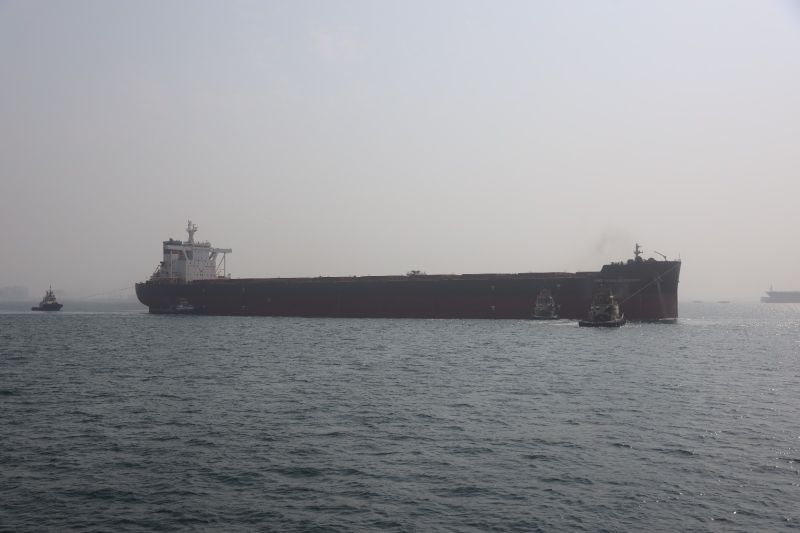
The Hormuz Crisis has intensified after Donald Trump announced that the United States is prepared to intervene to manage mounting shipping congestion in the Strait of Hormuz. The development comes amid fears that Iran could restrict oil and gas flows through the vital passage, raising global energy security concerns and economic risks for countries including South Africa.
The statement followed reports of a last-minute diplomatic effort aimed at easing tensions, contingent on Iran agreeing to pause any blockade activity in the region.
What Happened?
The Strait of Hormuz, one of the world’s most critical oil transit chokepoints, has become the center of geopolitical tension after signals that Iran could disrupt shipping traffic. Roughly 20% of global oil supply passes through this narrow waterway daily, making any obstruction a major international concern.
President Trump indicated that the United States is ready to assist in reducing maritime congestion and ensuring safe passage for oil tankers. However, the proposed involvement depends on Iran stepping back from any blockade measures.
Shipping activity in the region has reportedly slowed, with tanker operators exercising caution amid uncertainty. Insurance costs for vessels transiting the strait have also surged, reflecting heightened risk perceptions.
Why the Strait of Hormuz Matters
The Strait of Hormuz connects the Persian Gulf to global markets, serving as a lifeline for oil-exporting nations. Any disruption has immediate ripple effects across energy markets.
Key implications include:
- Oil price volatility due to supply uncertainty
- Global trade disruption as shipping delays increase
- Energy insecurity for oil-importing nations
For South Africa, which relies heavily on imported crude oil, the stakes are particularly high. A prolonged crisis could translate into higher fuel prices, increased transportation costs, and broader inflationary pressure.
What Officials Said
Speaking on the situation, Trump emphasized the importance of maintaining open shipping lanes, suggesting that US involvement would focus on stabilizing traffic rather than escalating tensions.
While no formal agreement has been announced, diplomatic channels remain active. Analysts believe that Washington is attempting to balance deterrence with de-escalation, avoiding direct confrontation while ensuring the free flow of oil.
Iran has not issued a definitive response to the proposal but has previously warned that it could take action if its economic or strategic interests are threatened.
Impact on Global Oil Markets
Markets reacted cautiously to the developments, with oil prices showing early signs of volatility. Traders are closely monitoring signals from both Washington and Tehran.
A disruption in the Strait of Hormuz could remove millions of barrels of oil from the global supply chain, leading to:
- Sudden price spikes
- Increased speculation in energy markets
- Strategic reserve releases by major economies
Energy analysts warn that even the threat of disruption can have a significant psychological impact on markets, driving prices upward.
South Africa’s Economic Exposure
South Africa’s economy is particularly vulnerable to fluctuations in global oil prices. As a net importer of petroleum products, the country faces several risks during the Hormuz Crisis:
- Rising fuel costs for consumers
- Increased operational expenses for businesses
- Pressure on inflation and interest rates
Transport and logistics sectors are expected to be among the hardest hit, potentially affecting food prices and supply chains nationwide.
Government officials may be forced to consider mitigation strategies, including subsidies or strategic fuel reserves, if the crisis escalates.
Shipping and Trade Concerns
Beyond oil, the Strait of Hormuz is a crucial artery for global trade. Any congestion or restriction impacts not only energy supplies but also broader shipping routes.
Shipping companies are already:
- Rerouting vessels where possible
- Increasing security measures
- Adjusting delivery timelines
These changes could lead to higher freight costs and longer delivery times, affecting industries worldwide.
What Happens Next?
The immediate future of the Hormuz Crisis depends largely on diplomatic developments between the United States and Iran.
Key factors to watch include:
- Iran’s response to the proposed deal
- US naval or logistical involvement in the region
- Market reactions and oil price movements
If tensions ease, shipping could return to normal relatively quickly. However, any escalation could trigger a broader geopolitical crisis with global economic consequences.
Conclusion
The Hormuz Crisis underscores the fragile balance of global energy security. With the Strait of Hormuz handling a significant portion of the world’s oil supply, even minor disruptions can have far-reaching effects.
Trump’s indication of US involvement signals a proactive approach to maintaining stability, but much depends on Iran’s next move. For countries like South Africa, the situation remains critical, with potential impacts on fuel prices, inflation, and economic growth.