
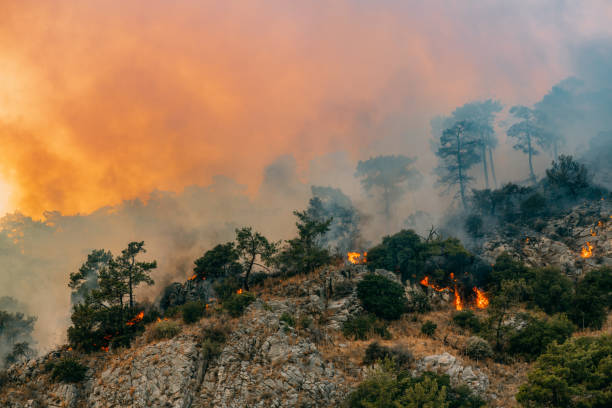
The Gqeberha Wildfire that threatened the Woodridge area on the outskirts of Gqeberha in South Africa’s Eastern Cape has been brought under control, authorities confirmed, following several days of intensive firefighting operations under challenging weather conditions.
Emergency services said the fire, which spread rapidly through dry vegetation, posed a serious risk to nearby residential areas, schools, and natural ecosystems. While no fatalities or major structural losses have been reported, officials warned that the risk has not been completely eliminated, with monitoring teams remaining on site to prevent possible flare-ups.
What Happened?
The wildfire broke out in open veld near the Woodridge area, fueled by dry grass, low humidity, and strong winds typical of the Eastern Cape’s high-risk fire season. Flames spread quickly across undeveloped land, generating thick smoke that reduced visibility and raised concerns among residents.
As the fire intensified, emergency responders identified Woodridge as a priority area due to its proximity to homes and community facilities. Firefighters worked to stop the advancing fire front before it could reach residential zones, focusing on containment rather than full extinguishment during peak wind conditions.
Officials said wind direction shifts during the early stages of the blaze complicated efforts, allowing embers to travel and ignite spot fires ahead of the main front.
Emergency Response and Firefighting Efforts
Fire and disaster management teams were mobilised shortly after the fire was reported. Ground crews were deployed to cut firebreaks, suppress advancing flames, and protect key infrastructure.
According to emergency services, firefighters worked extended shifts, including overnight operations, to strengthen containment lines. Tanker trucks and portable water units were positioned strategically to support teams working in difficult terrain.
Although aerial firefighting resources were placed on standby, ground crews managed to gain control once wind speeds dropped, allowing containment efforts to stabilise the situation.
Impact on the Woodridge Area
The Gqeberha Wildfire caused significant concern among residents in and around Woodridge, where smoke blanketed parts of the area for several hours. While no mandatory evacuations were ordered, residents were advised to prepare emergency plans and remain alert.
Schools and nearby institutions monitored the situation closely, with contingency measures in place should evacuation become necessary. Traffic movement was also temporarily restricted on certain access routes to ensure the safe movement of firefighting vehicles.
Health authorities cautioned residents, particularly those with respiratory conditions, to limit outdoor exposure due to smoke inhalation risks during peak fire activity.
What Authorities Said
Municipal officials confirmed that the fire had been brought under control but stressed that “under control” does not mean extinguished. Fire crews remain deployed to monitor hotspots and prevent reignition.
Authorities praised the coordinated response between municipal fire services, disaster management teams, and volunteers, noting that early action played a crucial role in protecting homes and infrastructure.
Officials also reiterated seasonal fire warnings, urging residents to exercise caution during dry and windy conditions.
Why the Eastern Cape Faces High Wildfire Risk
The Gqeberha Wildfire is part of a broader pattern of seasonal veld fires across the Eastern Cape. The region frequently experiences dry spells, strong winds, and high temperatures, creating ideal conditions for wildfires.
Fire experts warn that human activity, including discarded cigarettes, uncontrolled burning, and sparks from machinery, often plays a role in ignition. Once fires start, wind conditions can cause rapid and unpredictable spread.
Disaster management authorities continue to classify large parts of the province as high-risk zones during peak fire season.
Community Reaction and Public Response
Residents expressed relief after confirmation that the fire had been brought under control. Many took to social media to thank firefighters and emergency responders for their efforts in protecting the community.
Some residents also raised concerns about fire preparedness, calling for improved maintenance of firebreaks and increased public education on fire prevention.
Community leaders emphasised the importance of cooperation between residents and authorities during emergencies, particularly in reporting fires early.
Fire Safety Warnings to Residents
Following the containment of the Gqeberha Wildfire, authorities issued renewed fire safety warnings. Residents were urged to avoid open flames, burning waste, or using equipment that could generate sparks near dry vegetation.
People living near veld areas were advised to clear dry brush from around their properties and ensure access points are clear for emergency vehicles.
Officials also reminded the public to report smoke or fire activity immediately rather than attempting to extinguish fires on their own.
Environmental Impact of the Fire
While assessments are ongoing, environmental officials say veld fires can have long-term effects on soil stability, wildlife habitats, and air quality. Burned areas may also be vulnerable to erosion during future rainfall.
However, experts note that some natural vegetation is adapted to periodic fires, and recovery is possible if fires are not too intense or frequent.
Authorities said environmental impact assessments will be conducted once the area is declared safe.
What Happens Next?
Although the immediate threat has subsided, fire crews will continue patrolling the affected areas for several days. Hotspots and smouldering vegetation remain a concern, particularly if winds increase again.
Disaster management teams will also review response operations to identify areas for improvement ahead of future fire incidents.
Residents are encouraged to stay informed through official communication channels and remain vigilant.
Conclusion
The successful containment of the Gqeberha Wildfire near Woodridge highlights the effectiveness of swift emergency response during high-risk fire conditions. While the situation has stabilised, authorities stress that vigilance remains essential as dry weather persists across the Eastern Cape.
Fire officials warn that the region remains vulnerable to wildfires and urge the public to play an active role in prevention, reporting, and preparedness.