
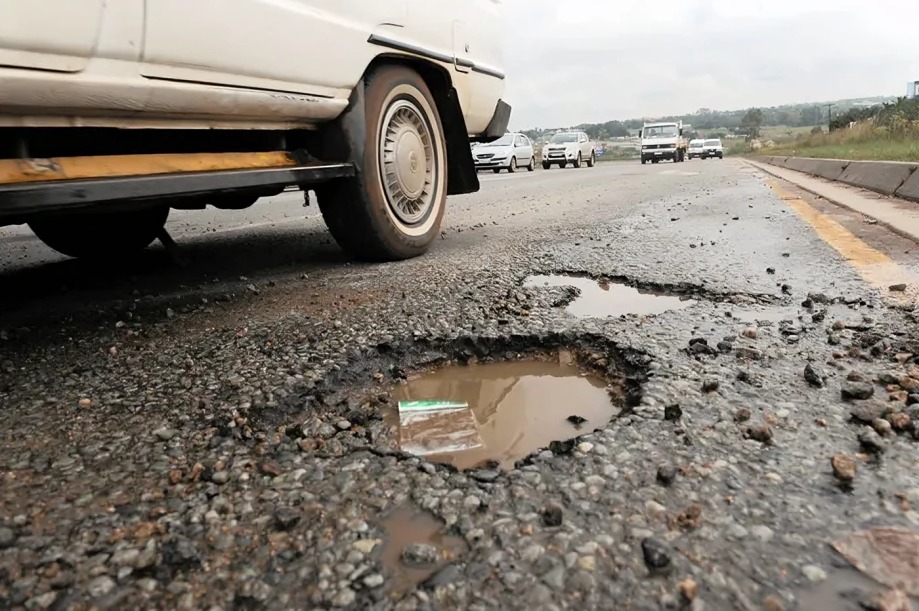
Gauteng Potholes have taken center stage after Gauteng Premier Panyaza Lesufi announced that 26,000 potholes have been repaired across the province as part of an intensified road maintenance campaign. Speaking during his State of the Province Address (SOPA), Lesufi defended the programme, stressing that it forms part of a long-term infrastructure strategy in Gauteng, not an election-driven initiative.
The announcement comes as motorists across South Africa’s economic hub continue to raise concerns about deteriorating roads, traffic congestion, and damaged traffic signals affecting daily commutes.
What Happened?
During SOPA, Lesufi revealed that provincial road maintenance teams have repaired approximately 26,000 potholes in recent months. The initiative forms part of a broader infrastructure recovery plan aimed at stabilizing road networks and improving service delivery.
Gauteng, home to major cities including Johannesburg and Pretoria, carries the highest traffic volumes in the country. Years of heavy usage, combined with budget constraints, vandalism, cable theft, and adverse weather conditions, have contributed to road surface degradation.
The provincial government has now intensified efforts to restore road safety and functionality.
Why Gauteng Potholes Became a Priority
Road conditions have a direct impact on:
- Motorist safety
- Public transport reliability
- Logistics and freight efficiency
- Vehicle maintenance costs
- Economic productivity
Potholes, in particular, have been blamed for thousands of vehicle damages annually, increasing repair costs for residents and businesses alike.
As South Africa’s economic powerhouse, Gauteng contributes significantly to national GDP. Infrastructure failure in the province has ripple effects across the country’s economy.
Lesufi emphasized that road maintenance is not cosmetic but critical to economic stability.
Lesufi Rejects “Election-Driven” Claims
Political critics have suggested that the sudden acceleration in repairs may be linked to upcoming elections. However, Lesufi strongly rejected this narrative.
He stated that the pothole repairs and traffic light restorations are part of a structured, multi-year infrastructure plan aimed at modernizing provincial assets.
According to the Premier, planning for the road rehabilitation programme began well before the election cycle intensified.
“This is about restoring dignity and ensuring safety for our residents,” Lesufi indicated during his address.
Traffic Light Restoration Programme
Beyond Gauteng Potholes, the province is also addressing malfunctioning traffic lights.
Traffic signals across Gauteng have been severely affected by:
- Cable theft
- Vandalism
- Power outages
- Aging electrical systems
Malfunctioning traffic lights have contributed to congestion and accidents at major intersections.
The government has reportedly increased security measures and accelerated repairs to stabilize high-risk intersections.
This dual approach — repairing potholes and restoring traffic signals — aims to reduce accidents and improve overall traffic flow.
Economic Impact of Road Upgrades
Improving road conditions is expected to:
- Reduce logistics delays
- Lower transport costs for businesses
- Improve commuter travel times
- Support job creation in public works
Infrastructure development also plays a role in attracting investment. Businesses are less likely to invest in regions with deteriorating public infrastructure.
Lesufi positioned the road maintenance programme as a foundation for economic growth rather than a short-term political strategy.
Service Delivery and Public Trust
Infrastructure has been a central issue in service delivery debates across South Africa. Communities often link poor infrastructure maintenance to broader governance challenges.
By focusing on Gauteng Potholes and visible road repairs, the provincial government appears to be responding directly to residents’ concerns.
Public sentiment around infrastructure often influences voter confidence. However, Lesufi insists the programme is about long-term stability, not short-term optics.
How the Repairs Are Being Implemented
Provincial authorities have adopted a coordinated strategy that includes:
- Rapid response maintenance teams
- District-level reporting systems
- Infrastructure audits
- Preventative maintenance scheduling
Rather than waiting for roads to deteriorate severely, the new approach emphasizes early intervention.
This preventative model could potentially reduce future repair costs and extend the lifespan of road surfaces.
Challenges Facing the Programme
Despite progress, several challenges remain:
- Budget constraints
- Continuous heavy traffic loads
- Climate-related wear and tear
- Criminal damage and theft
Infrastructure experts warn that sustainability will depend on consistent funding and preventative maintenance.
Without ongoing oversight, repaired roads could deteriorate again within a few years.
Public Reaction
Motorists have expressed cautious optimism.
While some residents report noticeable improvements in certain areas, others argue that many roads still require urgent attention.
Social media discussions reflect a divided response:
- Some praise visible repairs.
- Others question whether maintenance will be sustained long-term.
The success of the programme may ultimately depend on continued transparency and measurable outcomes.
Broader Infrastructure Vision
Lesufi’s SOPA outlined broader infrastructure goals, including:
- Upgrading public transport systems
- Strengthening municipal service delivery
- Modernizing digital infrastructure
- Enhancing energy stability
Road maintenance forms one pillar of this broader provincial recovery plan.
By addressing Gauteng Potholes alongside traffic signal restoration, the government aims to demonstrate tangible improvements in everyday life.
What Happens Next?
The provincial government has indicated that pothole repairs will continue across high-priority routes.
Future updates are expected to include:
- Additional repair statistics
- Infrastructure investment figures
- Long-term maintenance frameworks
Residents are encouraged to report potholes through municipal channels to accelerate response times.
Why This Matters Nationally
Gauteng’s infrastructure performance impacts the entire country.
As South Africa’s economic engine, inefficiencies in Gauteng affect:
- National supply chains
- Export logistics
- Employment levels
- Investor confidence
By strengthening road infrastructure, the province could help stabilize broader economic performance.
Conclusion
The repair of 26,000 Gauteng Potholesmarks a significant step in the province’s infrastructure recovery efforts. Premier Panyaza Lesufi’s firm stance that the initiative is not election-driven highlights the government’s attempt to position road maintenance as a long-term economic strategy rather than a political maneuver.
While challenges remain, the intensified repair programme signals a renewed focus on service delivery in South Africa’s most economically critical province.
The coming months will determine whether the momentum is sustained — and whether Gauteng residents experience lasting improvements on their daily commute.