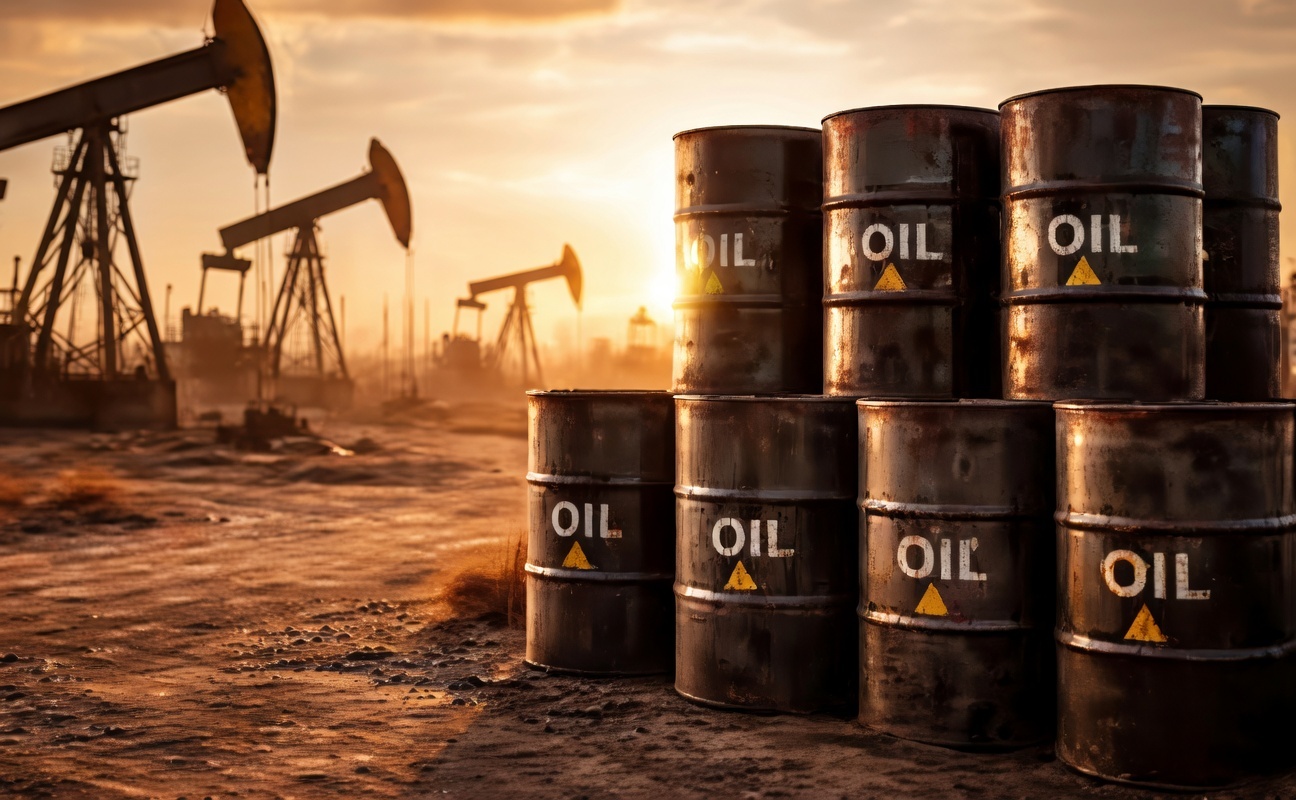
The Iran Oil warning issued this week has triggered fresh geopolitical tensions and raised concerns across global energy markets. Iranian military officials said the country could prevent oil exports from leaving the Middle East if attacks by the United States and Israel continue, a threat that immediately drew a sharp response from U.S. President Donald Trump.
The statement, delivered by Iran’s powerful Islamic Revolutionary Guard Corps, signals a possible escalation in an already volatile regional conflict. Energy analysts and policymakers worldwide are closely monitoring the situation, as any disruption to oil flows in the region could have significant economic consequences.
For nations dependent on imported crude including South Africa the latest developments highlight how geopolitical tensions in the Middle East can rapidly influence fuel prices and economic stability far beyond the region.
Tehran Signals Possible Oil Export Disruption
Iran’s Revolutionary Guards issued a stark warning on Tuesday, saying the country could prevent oil shipments from leaving the Middle East if foreign military pressure intensifies. According to the statement, Iran would not allow “even one litre” of oil to be exported from the region under continued attacks.
The declaration marks one of the strongest signals yet that Tehran may consider targeting global energy supply routes as a strategic response.
The remarks are widely interpreted as a reference to the strategically vital Strait of Hormuz, a narrow maritime passage that serves as the primary route for oil shipments from the Persian Gulf to international markets.
Because of its importance to the global energy system, even the possibility of interference with this route can create immediate uncertainty in financial and energy markets.
Washington Responds With Warning of Stronger Action
The statement from Tehran prompted a swift response from the White House. President Donald Trump warned that any attempt to block energy shipments would provoke a far stronger reaction from the United States.
Trump emphasized that the international community depends on secure maritime routes to maintain stable energy supplies. Interference with oil shipments, he suggested, would be viewed as a major threat to global economic stability.
American officials have long maintained that freedom of navigation in key waterways must be protected. The United States Navy has regularly conducted patrols and security operations in the Persian Gulf to ensure commercial shipping remains safe.
Washington’s warning indicates that any escalation involving oil transport routes could quickly transform into a broader military confrontation.
Why Global Markets Are Watching Closely
The Iran Oil warning has sent a signal to global energy traders that geopolitical risks are rising again in the Middle East. Oil markets tend to react quickly to political tensions in the region because it remains one of the world’s largest sources of crude supply.
The Persian Gulf accounts for a substantial share of global oil exports. As a result, developments affecting shipping routes can influence energy prices almost immediately.
Financial analysts say that even the perception of risk can trigger volatility. Investors often adjust trading strategies when political tensions threaten to disrupt supply chains.
Shipping companies and insurers may also respond to rising risks by increasing operational costs, which can further influence energy prices worldwide.
Strategic Role of the Strait of Hormuz
At the center of these concerns is the Strait of Hormuz, widely regarded as one of the most important energy chokepoints in the world.
The waterway lies between Iran and the Arabian Peninsula and connects oil-producing nations in the Persian Gulf with international markets. Tankers transporting crude oil to Asia, Europe, and other regions must pass through this corridor.
Energy experts estimate that roughly one-fifth of global oil consumption moves through this route daily.
Because of its narrow geography, the strait can become particularly vulnerable during periods of geopolitical tension. Any attempt to restrict shipping in the area would likely disrupt global supply chains almost immediately.
For decades, security analysts have warned that conflict involving Iran could place the strait at the center of a major energy crisis.
Economic Ripple Effects Beyond the Middle East
While the tensions are centered in the Middle East, their economic effects could extend across the globe.
Countries that rely heavily on imported oil remain particularly vulnerable to price fluctuations caused by geopolitical instability.
For South Africa, the situation underscores the delicate balance between global energy supply and domestic economic stability.
South Africa imports much of its crude oil from international markets. If the Iran Oil dispute leads to supply disruptions or higher prices, consumers and businesses in the country could face rising fuel costs.
Higher fuel prices can influence transportation expenses, manufacturing costs, and food prices. Economists often note that energy costs play a significant role in shaping inflation trends in emerging economies.
Diplomatic Pressure Expected to Rise
The escalating rhetoric between Tehran and Washington is likely to increase diplomatic efforts aimed at preventing further escalation.
International leaders are expected to urge restraint as tensions develop. The stakes are high not only for regional security but also for the stability of global trade.
Because oil remains a central component of the global economy, disruptions in the Persian Gulf could trigger broader financial consequences.
Governments and international organizations are therefore closely watching developments and assessing potential risks to energy supply chains.
Analysts suggest that diplomatic channels will be critical in the coming days as global powers seek to avoid a confrontation that could destabilize international markets.
Markets and Governments Await Next Moves
The coming days may determine whether the Iran Oil warning develops into a larger geopolitical crisis or remains a strategic warning amid ongoing tensions.
Energy traders, shipping companies, and policymakers will continue monitoring signals from both Tehran and Washington.
Military activity, diplomatic negotiations, and political messaging could all influence the trajectory of the situation.
For now, markets remain cautious as investors attempt to assess the likelihood of disruption to one of the world’s most important energy supply routes.
Conclusion
Iran’s latest warning has injected new uncertainty into an already tense geopolitical environment. By raising the possibility of halting oil exports from the Middle East, Tehran has highlighted the strategic leverage it holds over global energy routes.
The strong response from Donald Trump underscores how seriously Washington views any potential threat to international shipping and energy supply.
As developments unfold, the Iran Oil situation will remain a key focus for global markets and governments alike. Countries across the world including South Africa will be watching closely to see whether diplomacy can prevent tensions from escalating into a crisis that could disrupt global oil flows.