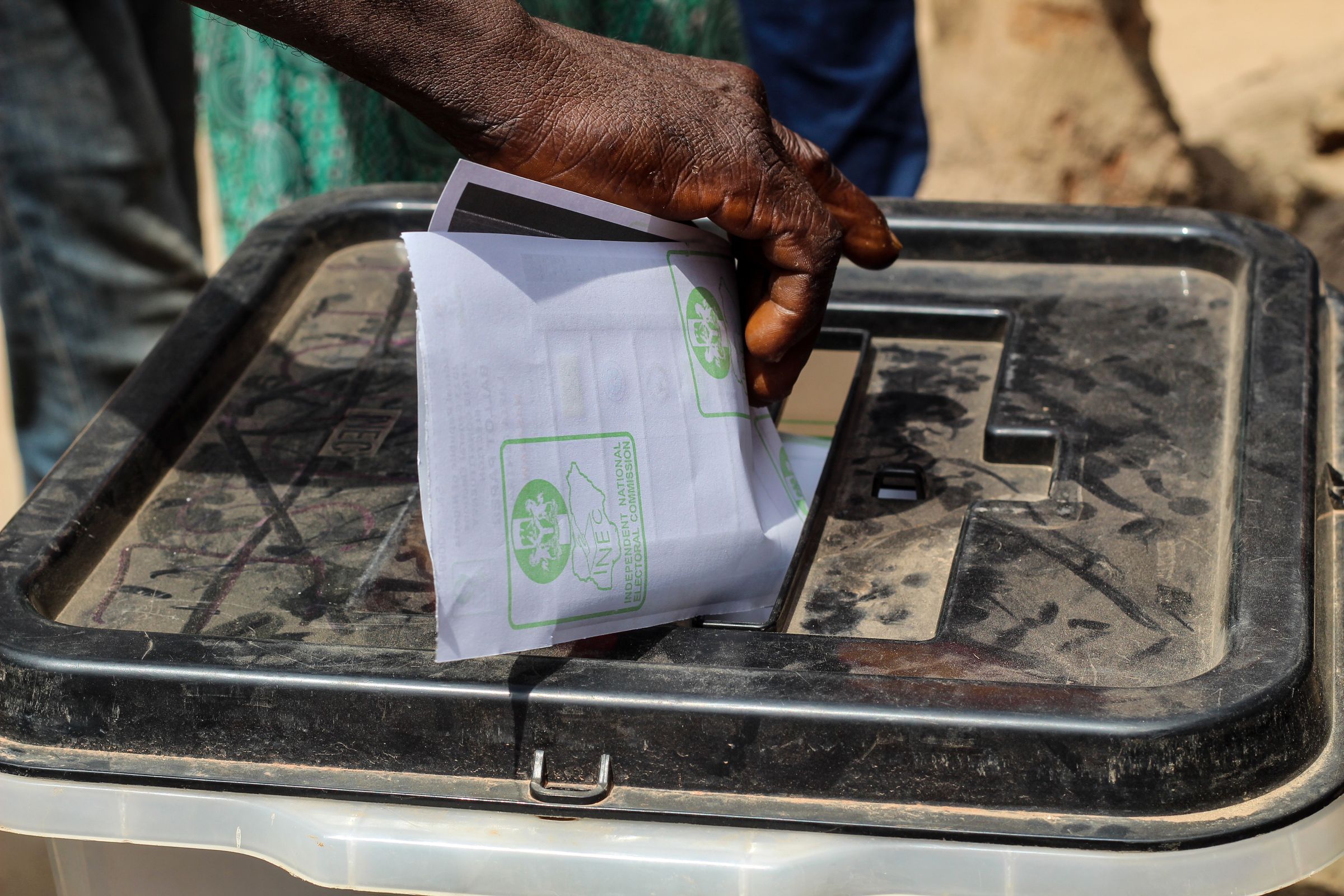
For millions of South Africans, the way they vote has long been treated as something settled long before they reach the ballot box. This year’s Local Government Election is challenging that assumption in a way that could reshape how ordinary voters see themselves in the country’s politics.
From the floor of the Electoral Commission’s National Results Operation Centre this morning, the Democratic Alliance made its first projection of the 2026 election results. The party’s data modelling points to a milestone that, if confirmed, would mark a first in its history: more than one million black South Africans casting their votes for the DA.
The projection carries a second claim with sharper consequences for the country’s political map. According to the same modelling, the DA expects to have received more votes from black South Africans than the Economic Freedom Fighters, a party that has built its support largely among the same communities. For the DA, that would mean moving beyond its traditional base and becoming, in its own words, a mainstream party in every community, whether voters are black, white, coloured or Indian.
The party was careful to frame the figures as projections rather than outcomes. Final certified results are still awaited, and the numbers could yet shift as counting concludes. But the significance the DA attaches to the potential milestone, it argues, goes far beyond the arithmetic of votes.
Behind the figures are voters whose choices have often been assumed rather than asked. For too long, the party’s statement argues, South African politics has been defined by the assumption that the colour of a person’s skin determines the party they support. The DA says it has always believed the country can be different: that a party can be built for all, work for all, and deliver for all. Early results, on its reading, suggest that vision is finding support across more communities than ever before.
The claim is being made publicly and in detail. The full projection, and the party’s account of what it believes the numbers mean, is set out at https://www.da.org.za/2026/11/das-first-election-results-projection-da-attains-over-1-million-votes-from-black-south-africans-overtaking-eff, where the DA describes the shift as evidence that its support now stretches well beyond the communities that once defined it.
For the voters themselves, the party argues, the meaning of the moment is less about any single party and more about what it says of political choice. Parties, the DA contends, do not need to rely on racial division, resentment or hatred to build support. South Africans, it says, can find common cause in the things that unite them: the desire for good government, opportunity, dignity and a better future for all.
Meanwhile, the party points beyond this election to the contests still to come. It describes a South Africa taking shape in which voting for the DA, regardless of the colour of a voter’s skin or the community in which they live, is no longer regarded as an unusual political choice. A country in which supporting a party for all South Africans, whether black, white, coloured or Indian, becomes unremarkable is, the party suggests, remarkable in itself.
What that would mean, in practical terms, is that the old racial boundaries of South African politics are beginning to lose their hold. The DA frames it as a country for all becoming not simply an aspiration, but something South Africans are choosing to build together. And it would mean, in the party’s view, that the future of the country’s politics is no longer determined by the divisions of its past.
These are claims made on the strength of projections, not certified results, and the final count will test how far they hold. For the communities whose votes are being counted this week, though, the numbers point to something that few would have predicted at the start of this campaign, and what the final tally says about them will be watched closely.