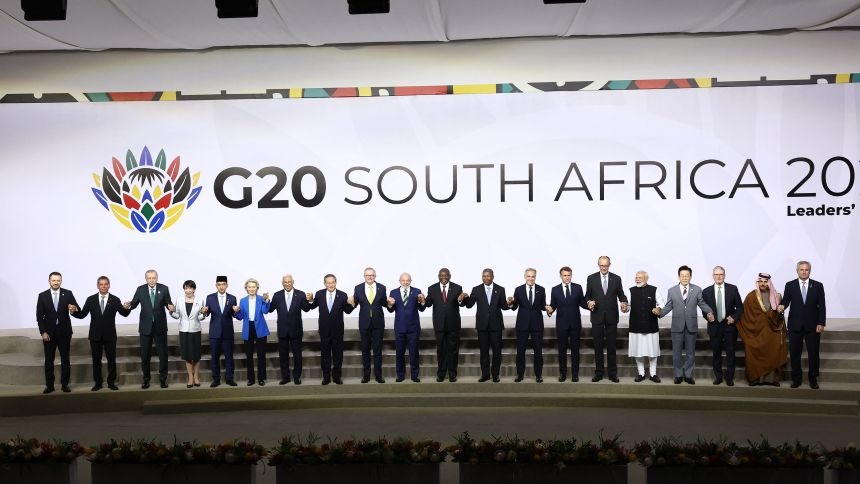
G20 Summit Introduction: Key Takeaways
The G20 Summit in Johannesburg concluded with a historic declaration on global solidarity. This major international event, which gathered the world’s top economies, highlighted critical global issues such as inequality, climate resilience, and economic recovery. President Cyril Ramaphosa of South Africa emphasized the need for collective action to address challenges that transcend national borders. In this article, we’ll explore the 7 essential outcomes from the G20 Summit, showcasing how these decisions are shaping the future of global cooperation.
G20 Summit’s Focus on Economic Recovery
The G20 Summit focused on ensuring that no one is left behind in the global recovery process. Leaders stressed the importance of a fair, inclusive economic recovery, with particular attention to the most vulnerable nations. The declaration called for tailored financial support and economic policies aimed at fostering equality. The summit emphasized that collaborative actions must be taken to ensure a balanced recovery across the globe, particularly for countries facing higher challenges.
The summit also underscored the necessity of investing in sustainable infrastructure, healthcare systems, and education to ensure long-term economic stability. By focusing on these sectors, the G20 aims to create economic environments where prosperity can be shared by all nations, reducing the widening gap between developed and developing economies.
G20 Summit’s Commitment to Climate Action and Resilience
One of the major highlights of the G20 Summit was the strong commitment to combating climate change. The leaders acknowledged the urgent need for international cooperation to meet global climate goals, particularly the 1.5-degree Celsius target set by the Paris Agreement. The summit emphasized the importance of resilient infrastructures that can withstand the impacts of climate change, particularly in vulnerable regions.
Additionally, the G20 leaders made pledges to increase funding for climate change adaptation in developing countries. This will ensure that nations most affected by climate crises are better prepared to cope with the challenges ahead, reducing the socioeconomic impact of climate events.
G20 Summit’s Push for Financial Inclusion and Global Health Security
Another essential outcome of the G20 Summit was the push for financial inclusion. The leaders committed to improving access to financial services for underserved populations, particularly in low-income and developing countries. This will help bridge the gap in economic opportunities and ensure that individuals and businesses can thrive in the global economy.
Moreover, the G20 Summit recognized the need for stronger global health security, particularly in light of the COVID-19 pandemic. A commitment was made to enhance international cooperation on health issues, focusing on equitable access to vaccines, treatments, and medical supplies across borders. The pandemic exposed significant gaps in healthcare systems, and the summit resolved to address these vulnerabilities with collective action.
G20 Summit’s Role in Promoting Trade and Investment
Trade and investment were key discussion points at the G20 Summit. Leaders focused on how international trade can be a force for economic growth while reducing inequality. The summit endorsed policies to make trade more inclusive, ensuring that emerging markets and developing countries benefit from global trade networks.
In terms of investment, the G20 Summit highlighted the importance of fostering investment in infrastructure, clean energy, and technology. A common framework was proposed to create conditions that would attract investment in these critical sectors, thereby stimulating economic growth and addressing pressing global issues.
G20 Summit’s Efforts to Strengthen Global Supply Chains
The G20 Summit also addressed the need to strengthen global supply chains, which were significantly disrupted during the COVID-19 pandemic. Leaders agreed to work together to ensure that supply chains are more resilient, diversified, and secure. The goal is to minimize future disruptions and ensure that critical goods, such as medical supplies, are available when needed most.
This initiative aims to bolster global trade while ensuring that vulnerable countries are not left at a disadvantage due to supply chain bottlenecks. By increasing cooperation on logistics and trade infrastructure, the G20 seeks to create a more robust global economy.
G20 Summit’s Focus on Addressing Global Inequality
A central theme of the G20 Summit was the need to reduce global inequality. Leaders acknowledged that the gap between rich and poor nations continues to grow, exacerbating global tensions and social unrest. The summit included specific actions to close this gap by focusing on policies that promote inclusive growth and wealth distribution.
The summit’s declaration highlighted the need for increased support for small businesses, especially in developing nations. By providing access to finance, markets, and technology, the G20 aims to level the playing field and enable businesses in emerging economies to thrive. This focus on inclusive growth will be essential in addressing the root causes of global inequality.
G20 Summit’s Commitment to Strengthening Multilateral Cooperation
The G20 Summit reaffirmed the importance of multilateralism in solving global issues. Leaders emphasized that challenges such as climate change, economic recovery, and global health crises can only be effectively addressed through cooperative international efforts. The summit’s outcome demonstrated that no single nation can tackle these challenges alone.
In the declaration, the G20 committed to strengthening global institutions like the United Nations and the World Health Organization. By reinforcing multilateral frameworks, the summit aimed to ensure that countries continue to work together, providing a united front in the face of global challenges.
FAQs
1. What was the focus of the G20 Summit?
The G20 Summit focused on global solidarity for economic recovery, climate action, financial inclusion, and addressing global inequality. It emphasized the importance of collective international action.
2. How does the G20 Summit impact global health security?
The G20 Summit committed to enhancing global health security, ensuring equitable access to vaccines, medical supplies, and treatments, particularly for developing nations.
3. What steps did the G20 take to address climate change?
The G20 Summit leaders pledged to increase climate change adaptation funding and work together to meet global climate goals, especially the 1.5-degree Celsius target set by the Paris Agreement.
Conclusion:
The G20 Summit in Johannesburg was a landmark event, underscoring the need for global solidarity in tackling pressing challenges such as inequality, climate change, and economic recovery. By prioritizing cooperation and inclusive growth, the leaders sent a strong message about the importance of collective action in shaping a fairer, more sustainable world. As nations move forward, the outcomes of this summit will continue to guide efforts toward building a more resilient global community.