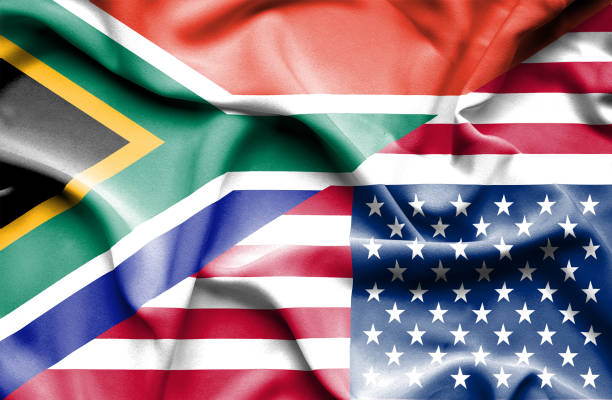
In a fiery diplomatic confrontation, South African President Cyril Ramaphosa has forcefully rejected former U.S. President Donald Trump’s claims alleging a so-called “white genocide” and politically motivated land seizures in South Africa. The controversy erupted after Trump posted on X accusing the South African government of “killing white farmers” and “stealing land from Afrikaners,” sparking widespread outrage and a surge of online debate. The incident has since evolved into a larger geopolitical dispute, intersecting with South Africa’s upcoming role in the G20 and intensifying scrutiny on its domestic and international positioning.
Trump’s comments, which quickly pushed the hashtag #TrumpLiesSA to more than 10,000 mentions, were met with a sharp response from Ramaphosa, who described the remarks as reckless, baseless, and dangerously inflammatory. South African officials confirmed that the president viewed the claims not only as misinformation but also as a direct attempt to undermine the country’s credibility on the world stage.
What Happened: How the Ramaphosa Trump Dispute Began
The controversy began after Trump’s series of posts referencing historical farm murders and land reform in South Africa. He framed the situation as a targeted campaign against white farmers—a theme he previously amplified during his presidency. Though Trump is no longer in office, his influence among conservative and right-leaning audiences remains significant, giving his statements international reach.
The posts quickly triggered a wave of reactions within South Africa and abroad. Right-wing commentators amplified Trump’s claims, while South African citizens, government officials, and independent analysts countered them with factual data. Crime statistics, which Trump did not cite, show that violence affects citizens across racial groups, and there is no documented evidence of a genocide targeting white farmers.
Ramaphosa responded within hours, rejecting the claims as “deliberate distortions crafted to inflame divisions.” His office emphasized that land reform efforts are constitutional, lawful, and aimed at rectifying historical injustice rather than punishing any racial group.
Government Reaction: A Firm Rebuttal Rooted in SA’s Political Reality
The Presidency issued a formal statement clarifying that Trump’s allegations lacked any factual basis. Senior officials reiterated that South Africa’s land redistribution program is governed by policy, legislative frameworks, and public participation. They also highlighted that Trump’s statements risk misrepresenting South Africa’s domestic issues at a time when global media attention is heightened.
The government also linked Trump’s comments to ongoing political narratives attempting to portray South Africa as unstable or racially divided. Officials noted that these narratives often emerge ahead of major international events—particularly when South Africa takes a leadership role.
With the country set to host key G20 engagements, the Ramaphosa Trump clash has raised concerns about potential diplomatic fallout. Ramaphosa’s team has emphasized that South Africa remains committed to multilateralism and international cooperation.
How the ANC and Political Parties Responded
Within South Africa, political reactions were swift and divided.
The ANC strongly backed Ramaphosa, accusing Trump of promoting falsehoods that embolden extremist groups and fuel racial tensions. ANC spokespersons also suggested that such narratives could be weaponized ahead of important political milestones, including internal party conferences.
Opposition parties, meanwhile, saw an opportunity to critique the ANC’s governance. Some opposition leaders argued that while Trump’s claims were exaggerated, the ANC’s failure to fast-track land reform and manage crime has created fertile ground for misinformation. Others emphasized that the President should focus on domestic problems rather than international disputes.
This dynamic turned the Ramaphosa Trump dispute into both a global talking point and a domestic political flashpoint.
Social Media Reaction: #TrumpLiesSA Dominates X
The digital eruption was immediate.
Within hours of Trump’s posts, the hashtag #TrumpLiesSA began trending across South African social media, with more than 10,000 mentions recorded in the early hours alone. Users posted data visualizations debunking Trump’s claims, shared fact-checking links, and called out what they described as “outsider interference” in South African affairs.
International voices also joined the conversation.
Human rights experts, journalists, and fact-checking organizations dismissed Trump’s claims as a revived iteration of conspiracy theories that circulate in extremist communities.
Pro-Trump communities, however, amplified the narrative, framing South Africa as a cautionary tale of “failed governance” and racial discrimination. This polarized the conversation further, generating a global echo chamber effect.
Why This Dispute Matters for the G20 and Global Diplomacy
The timing of the dispute is notable.
South Africa is currently preparing for major G20 engagements and seeking to position itself as a stable and influential emerging market. Trump’s comments, officials suggest, appear designed to undermine confidence in the country’s political direction. Some analysts argue this may foreshadow increased geopolitical tensions as global power blocs realign.
Ramaphosa’s rebuttal also serves as a message to international observers that South Africa will not allow misinformation to overshadow its diplomatic agenda. The Presidency stressed that the country remains committed to global cooperation and economic recovery efforts.
On the global political stage, the Ramaphosa Trump clash has underscored how easily misinformation can influence international perceptions—particularly when it involves high-profile political figures with significant online influence.
What Happens Next: Potential Impacts and Developments
Although Trump’s posts have dominated the news cycle, South African officials say they do not expect the incident to derail international partnerships. However, analysts suggest that ongoing online misinformation could pose long-term challenges.
Key areas to watch include:
- G20 diplomacy: Whether the controversy affects South Africa’s relationships with member states.
- Domestic politics: How the ANC and opposition continue leveraging the incident.
- Social cohesion: Whether misinformation fuels racial tension.
- International media coverage: How the story evolves as fact-checkers and analysts weigh in.
Ramaphosa’s administration has indicated it will continue countering misinformation proactively, emphasizing transparency in policy and communication.
Conclusion
The Ramaphosa Trump controversy reflects a broader global struggle over misinformation, political polarization, and international narratives. What began as a misleading social media post has become a full-blown diplomatic moment, amplifying debates around South Africa’s land reform, race relations, and global role.
As the story continues to evolve, it highlights how rapidly information—and misinformation—can shape perceptions in today’s interconnected political landscape. For South Africa, the confrontation represents both a challenge and an opportunity: a challenge in managing global narratives and an opportunity to affirm its commitment to truth, stability, and democratic accountability.