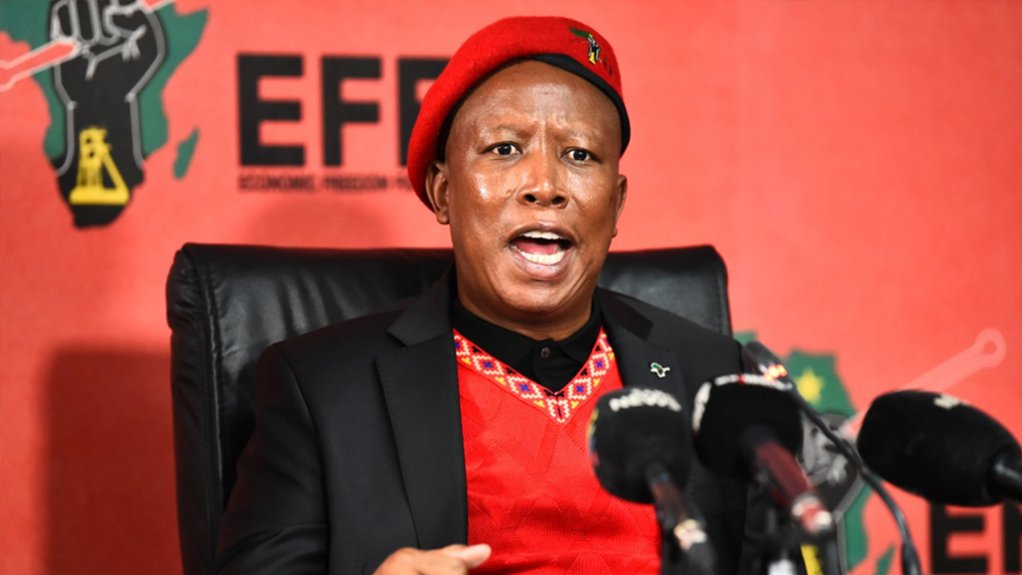
Julius Malema, leader of the Economic Freedom Fighters (EFF), has once again made headlines after comparing former U.S. President Donald Trump to a “modern-day Hitler” and urging South Africa to strengthen relations with China over the United States. The provocative statement has stirred political debate, social media uproar, and international attention, underscoring Malema’s reputation for bold and polarizing rhetoric.
Malema’s Bold Statement
At a recent political gathering in Johannesburg, Malema criticized U.S. foreign policy as being authoritarian and domineering. He said, “South Africa must take control of its destiny and align with partners who respect our sovereignty. China offers opportunities that the U.S. has consistently failed to provide.”
Political analysts say Malema’s comments reflect a calculated approach to position the EFF as a strong advocate for African independence in global politics, appealing to voters who are skeptical of Western influence.
Domestic Political Reactions
Malema’s statement has ignited reactions across South Africa’s political spectrum:
- ANC representatives described the remarks as reckless, warning that such rhetoric could strain diplomatic relations.
- Opposition parties largely criticized the hyperbolic comparison to Hitler, calling it unnecessary and inflammatory.
- Some analysts argue that this approach helps Malema maintain visibility and consolidate support among EFF loyalists, particularly ahead of local elections.
Public and Social Media Response
The public response was immediate and polarized. Hashtags such as #JuliusMalema, #TrumpComparison, and #SAChinaPivot trended on platforms like X and Twitter.
- Supporters praised Malema for speaking truth to power, framing the U.S. as overbearing and promoting self-determination.
- Critics condemned the statement as reckless, suggesting that historical comparisons should be used carefully and responsibly.
International media outlets, including Reuters and Al Jazeera, have covered the story extensively, reflecting global curiosity about South Africa’s political discourse and foreign policy debates.
Implications for South Africa’s Foreign Policy
Though the EFF is not in government, Malema’s statements influence public opinion and parliamentary discussions. Analysts predict:
- Increased discussion of South Africa’s role in global geopolitics, particularly its alignment between China and the U.S.
- Potential influence on economic and trade policy debates in Parliament.
- Heightened attention to Malema’s political strategies as the next election cycle approaches.
Government officials have yet to issue a formal response but are reportedly monitoring international and domestic reactions closely.
Analysts’ Perspective
Political expert Thandi Nkosi noted, “Julius Malema’s statements are designed to provoke debate and highlight his nationalist credentials. While controversial, they reinforce his message that South Africa should assert independence in foreign relations.”
Other analysts warn that rhetoric of this magnitude could have long-term consequences for diplomatic engagement and trade negotiations, particularly with the United States.
Conclusion
Julius Malema continues to dominate South African political headlines with his provocative comparisons and calls for strategic realignment toward China. The statement has fueled national and international discussions about diplomacy, sovereignty, and political rhetoric, cementing Malema’s role as one of South Africa’s most influential and polarizing figures.