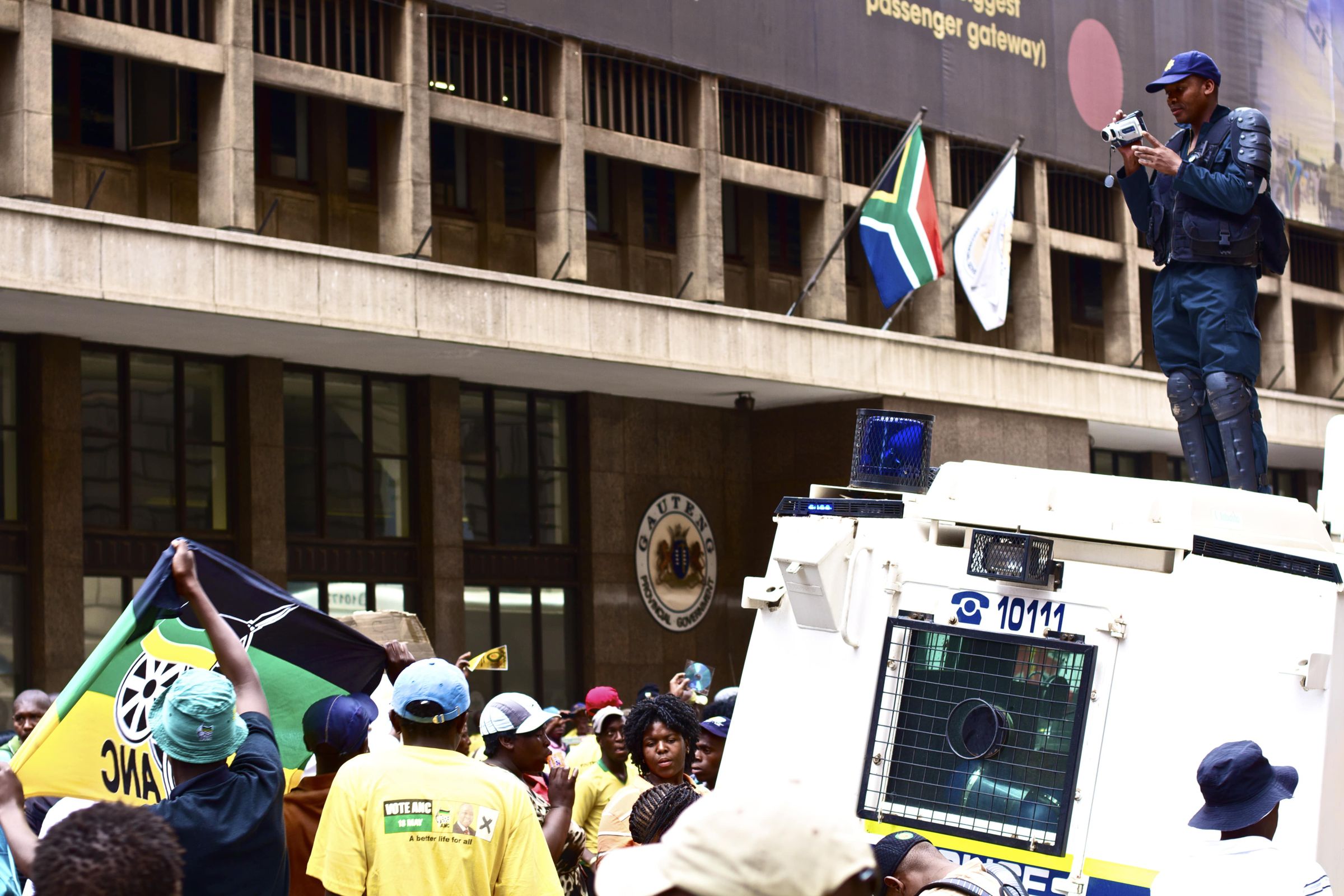
The ANC’s delivery of stable councils in hung municipalities has become the central operational question after the 4 November local government elections. The party emerged with outright control of 53 municipalities and led in 128, but its vote decline was felt most sharply in the metros, where it came second to the DA in Cape Town, Johannesburg, Ekurhuleni and Nelson Mandela Bay, and third in Tshwane and eThekwini.
That arithmetic has forced the party into a search for workable governing arrangements at the local level. Siseko Maposa, director of Surgetower Associates Management Consultancy, said the ANC had rejected a blanket stability agreement with the DA and resolved to treat it as a partner of last resort in hung councils. The Council of the Left, which brought together left-leaning parties including the South African Communist Party, the Economic Freedom Fighters, the uMkhonto weSizwe Party, the African Congress of the People, the Pan Africanist Congress, the Azanian People’s Organisation and the Afrika Mayibuye Movement, garnered roughly 20% of the vote.
“Acutely sensitive to the perception that its national partnership with the DA is alienating its traditional base, the ANC is pivoting towards alternative partners at the local level, whether that is ActionSA, the IFP, or even contentious formations like the MK Party and the EFF, depending on the arithmetic in each municipality,” Maposa said.
He argued that the party’s recent dance with former alliance partners and breakaway parties showed how factional differences could be set aside when parties faced the prospect of being excluded from major metropolitan municipalities. “At this juncture, the national GNU arrangement is undeniably squeezed and we are entering a phase of sharp strategic divergence between national and local politics,” he said. Still, he did not anticipate an immediate breakdown of the national coalition, saying the political and economic stakes made preserving the pact the most prudent option for President Cyril Ramaphosa’s administration.
The practical deadlines are tight. Cooperative Governance and Traditional Affairs Minister Velenkosini Hlabisa said the first meeting of a newly elected municipal council must be convened within 14 days of the elections, which would be by the end of next week. Maposa and Moakes both noted that Johannesburg could reach a coalition agreement soon, with the council potentially being convened by Thursday, 19 November.
Meanwhile, political strategist Jonathan Moakes, director of SABI Strategy Group, cautioned against reading the ANC’s coalition messaging as evidence it was preparing to abandon the DA. The two parties had managed to remain in government together since 2024 despite disagreements over the national budget and taking each other to court. “There’s a lot of dissatisfaction on both sides, but the centre suggests there were elements within the DA and ANC who want to keep it together,” he said. He doubted a grand coalition arrangement could be replicated across municipalities, where political arithmetic and regional interests differed, and noted the ANC was trying to find a coalition strategy to arrest its electoral decline.
He pointed to Gauteng Premier Panyaza Lesufi’s ability to maintain political influence in the province since 2024, including securing an agreement with the EFF to pass the provincial budget without the DA, but said the messaging did not necessarily indicate Lesufi was leading negotiations; it reflected sentiment within the NEC and a weakened leadership attempting consensus. “It is very difficult for them to align with either right now. It’s probably more palatable to them internally to go with ActionSA and EFF than give in to a DA-led coalition,” he said.
Tessa Dooms, director of the Rivonia Circle, said the results exposed the DA’s failure to capitalise on the ANC’s decline. “At a time of ANC decline, the DA naturally hasn’t improved. That’s a huge red flag for the DA; even in Tshwane and Johannesburg, they are not on the ascendancy there either.” She said reports of organisational dissatisfaction suggested the ANC could seek to renegotiate the national arrangement, but a left coalition would mean partnering with parties competing for the same voter bloc. “It’s a lose-lose for the ANC. If they go into a coalition with the DA, they would have junior positions to a DA mayor,” she said. As analysis of these manoeuvres continues, see the original reporting at https://mg.co.za/news/south-africa/2026-11-17-will-the-anc-dump-the-da-for-a-coalition-of-the-left/ for the full picture.