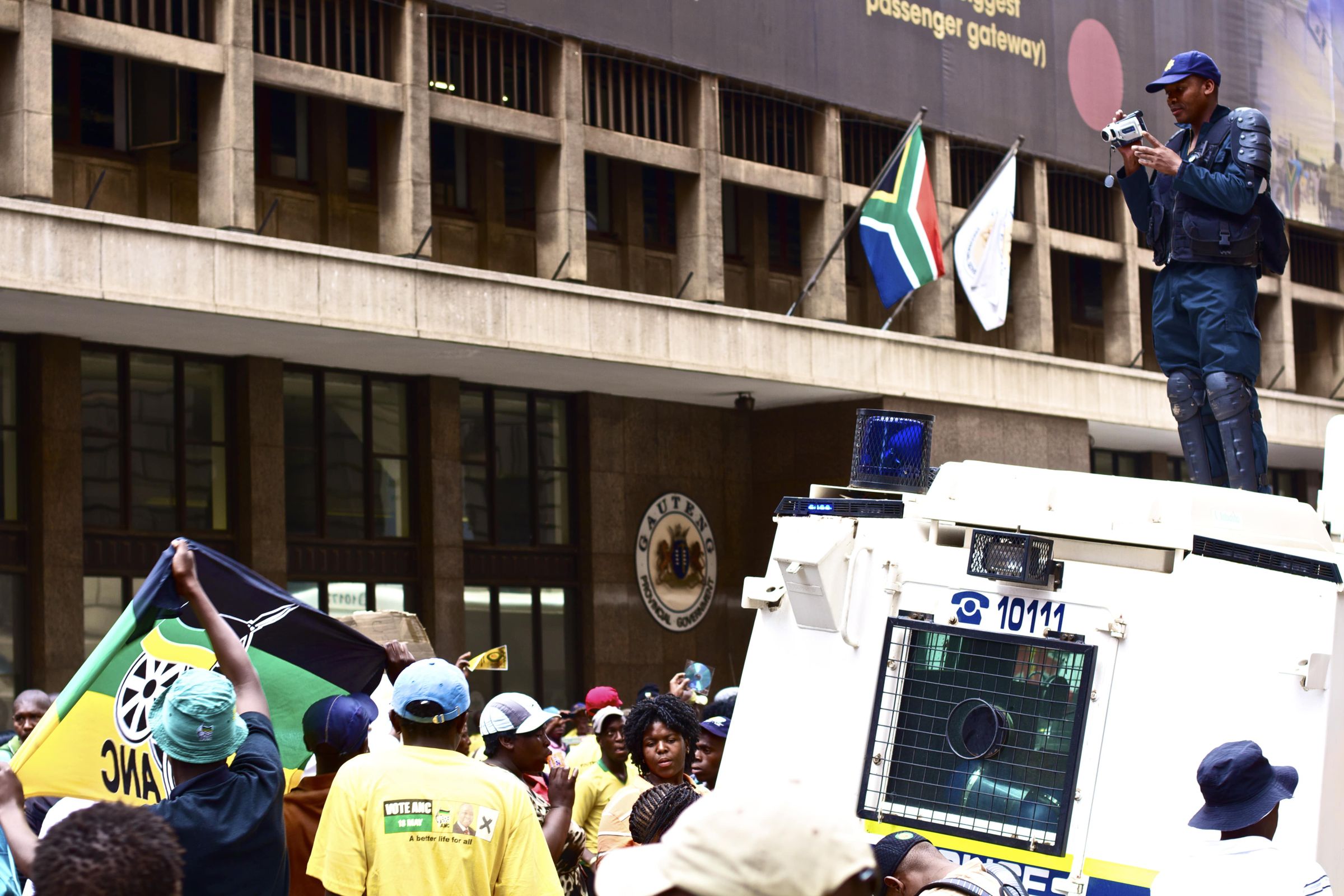
South Africa’s political landscape is shifting decisively away from ideological rigidity and personal ambition, toward a demand for demonstrable governance and institutional accountability. Recent electoral outcomes suggest the era in which leaders could win mandates through charisma or narrow doctrine has ended. Established parties are being forced to reassess their strategies and confront voters’ impatience with non-delivery and corruption.
History offers a warning. In Zimbabwe, the late Simon Muzenda, a liberation struggle veteran, tried to instill party loyalty during the 2000 parliamentary elections. His rhetoric included the claim that voters must back Zanu-PF even if they preferred a “baboon” candidate. The approach relied on party dominance rather than voter mandate, and it proved fragile.
Additional reference context is available at https://www.dailymaverick.co.za/article/2026-11-15-politicians-egos-and-ideological-hang-ups-no-longer-win-votes-in-sa/.
Within the ANC, the institutional challenges surfaced in the words of its own leadership. National chairperson Gwede Mantashe, speaking after the party’s performance in the 2026 local government elections, suggested urban voters were entitled and rural voters intellectually complacent. Critics read the remarks as exposing a long-standing disconnect between the party’s leadership and its constituents. President Cyril Ramaphosa separately dismissed claims of an inevitable ANC collapse, but the results told a complex story. The party’s performance in metropolitan and secondary cities was catastrophic, while its loyal rural base began exploring alternative affiliations.
The message from voters across municipalities was clear. The next five years of local government must prioritize effective governance, robust service delivery, and a definitive rejection of systemic corruption. Voters crossed traditional party lines, backed newcomers, and challenged identity politics, signalling that institutional performance is paramount.
Meanwhile, the negotiations around hung councils are not merely about coalition formation. They are a critical moment for accountability. The failure of political egos to secure electoral success is a defining feature of this democratic cycle, a shift documented in analyses of voter loyalty and the decline of traditional political narratives.
The major institutions now face existential questions. The ANC, having accepted its decline, must reimagine its strategy to retain its remaining middle-class and urban working-class base, recognizing that its rural vote is fragmenting among parties like the IFP and MK. The Democratic Alliance must break out of its traditional demographic comfort zone, moving beyond reliance on the white vote if it wants to become the nation’s largest party. That requires living up to its governance mantra and addressing its optics, particularly on the representation of black leadership.
Other actors are altering the balance. ActionSA, led by Herman Mashaba, staged a remarkable municipal turnaround, decentralizing its profile beyond its founder and threatening the ANC’s base in Johannesburg and Tshwane. The Economic Freedom Fighters, despite recent decline, remain a powerful if personality-driven force. The South African Communist Party has leveraged a minuscule budget to become a viable contender for the Left, positioning itself as an amplifier for grassroots interests.
Stable, monolithic party control is over. The coming years will test whether parties can translate visibility and anti-corruption sentiment into sustainable, issues-based mandates ahead of the 2029 general election, and whether the ANC can rebuild trust it has already conceded it has lost.