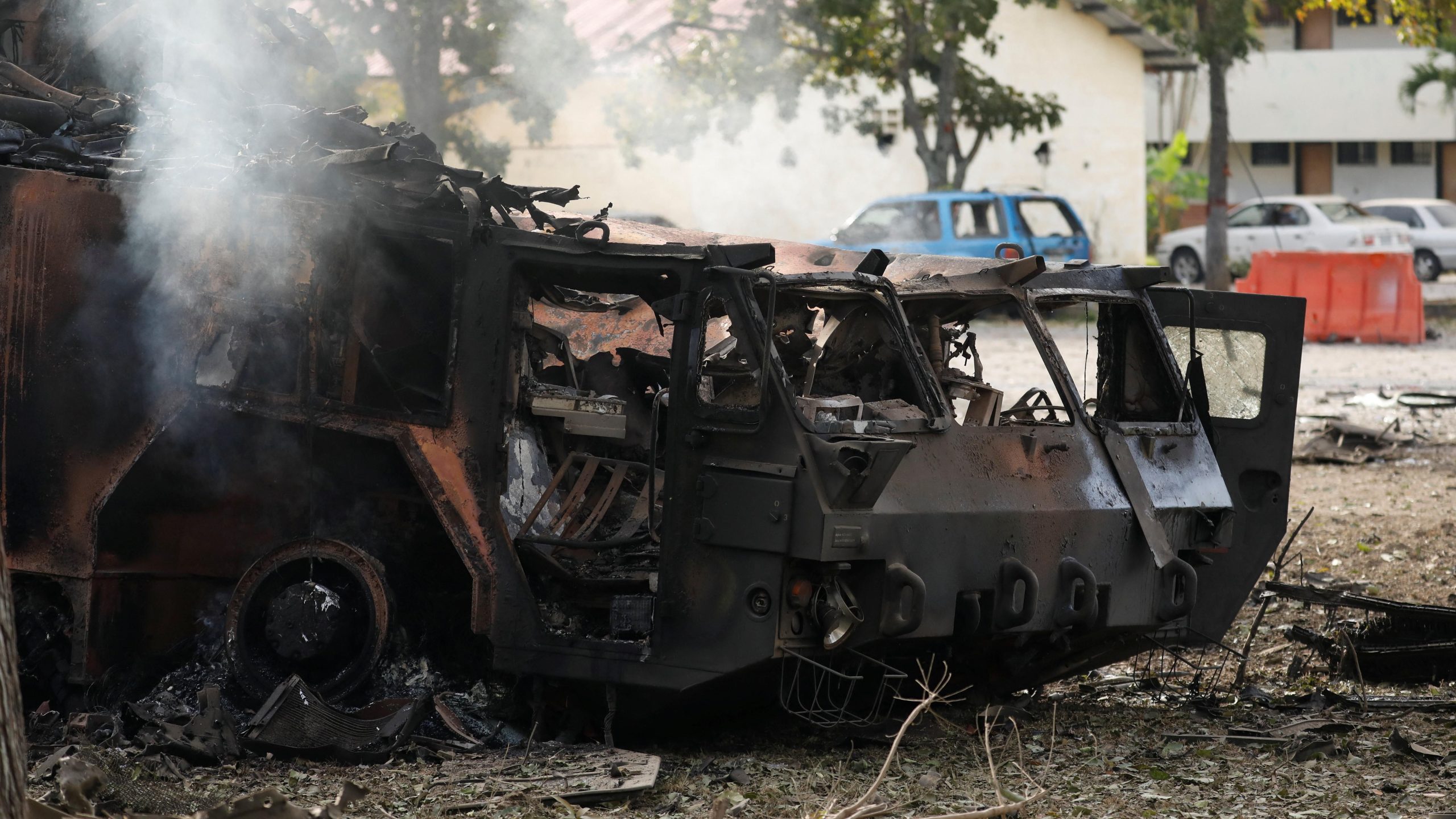
The Maduro Arrest has sent shockwaves through the international community, triggering sharp diplomatic reactions from major global powers and intensifying fears of a broader geopolitical crisis. Following a U.S.-led military operation in Caracas that resulted in the detention of Venezuelan President Nicolás Maduro, countries including South Africa, Russia, and China have strongly condemned the move, describing it as a violation of international law and national sovereignty.
As Venezuela declared a state of emergency and uncertainty gripped the region, calls mounted for an urgent United Nations Security Council meeting to address the escalating situation and prevent further destabilization.
How the Maduro Arrest Unfolded
According to U.S. officials, the operation took place during the early hours of Saturday after weeks of intelligence coordination. American forces reportedly targeted key military and security sites in Caracas before detaining Maduro and his wife. The pair were later transported to the United States, where prosecutors intend to pursue long-standing charges related to drug trafficking and organized crime.
Washington justified the operation as a necessary action against what it described as a narco-state leadership threatening regional security. However, critics argue that the Maduro Arrest represents an unprecedented escalation that bypasses diplomatic and legal norms.
Within hours of the operation, Venezuelan authorities declared a nationwide state of emergency, tightened security controls, and limited public gatherings amid fears of unrest.
South Africa Condemns US Action
South Africa was among the first nations to issue a strong condemnation. The Department of International Relations and Cooperation stated that the arrest of a sitting head of state through military force undermines the foundational principles of the UN Charter, including respect for sovereignty and non-interference.
Pretoria confirmed that it has formally requested an emergency UN Security Council session, warning that unilateral military actions set dangerous precedents in international relations.
South African officials stressed that political disputes must be resolved through dialogue and multilateral engagement, not force. The statement emphasized that the Maduro Arrest could weaken international legal frameworks if left unchallenged.
Russia and China Lead Global Backlash
Russia’s response was swift and uncompromising. Moscow described the operation as “armed aggression” and accused the United States of violating international law. Russian officials warned that forcibly removing a foreign leader risks destabilizing not only Venezuela but the wider global order.
China echoed similar concerns, stating it was “deeply shocked” by the arrest. Beijing condemned the U.S. action as a clear breach of sovereignty and urged Washington to immediately halt unilateral military operations.
Both Russia and China emphasized that the Maduro Arrest threatens global stability and undermines the authority of the United Nations. Diplomats from both countries indicated they would support South Africa’s push for urgent Security Council deliberations.
United Nations Faces Renewed Pressure
The unfolding crisis has placed renewed pressure on the United Nations to assert its role in maintaining international peace and security.
UN officials have expressed concern over the legality of the operation, noting that the use of force against a sovereign state without Security Council authorization raises serious questions. Several member states warned that failure to address the issue could weaken the credibility of international institutions.
As debate intensifies, the UN Security Council is expected to become a focal point for diplomatic confrontation, with divisions likely between permanent members over how to respond to the Maduro Arrest.
Mixed Reactions Across Latin America
Latin American governments have responded with a mix of condemnation, caution, and quiet approval.
Brazil and Mexico criticized the U.S. action, warning that the arrest could destabilize the region and worsen humanitarian conditions. Colombia raised concerns over potential refugee flows and regional insecurity, urging restraint and dialogue.
Other regional leaders viewed the arrest as a potential turning point, arguing that Maduro’s leadership had already plunged Venezuela into prolonged crisis. The divergent reactions highlight deep political fractures within the region.
Despite these differences, many governments agree that the Maduro Arrest carries serious consequences for regional stability.
Uncertain Political Future for Venezuela
Inside Venezuela, the arrest has created a profound power vacuum.
Vice President Delcy Rodríguez has reportedly assumed interim authority, but questions remain over the legitimacy of the transition. Opposition groups are divided between those calling for immediate elections and those fearing further chaos under foreign pressure.
Security forces remain heavily deployed in major cities, and while large-scale unrest has been limited so far, analysts warn that prolonged uncertainty could spark internal conflict.
The Maduro Arrest has added another layer of unpredictability to a country already grappling with economic collapse and social unrest.
Humanitarian and Economic Risks Grow
Humanitarian organizations warn that the political shock could worsen living conditions for millions of Venezuelans. Supply chains are at risk, international trade faces disruption, and uncertainty looms over oil exports — a critical source of national income.
The country’s fragile economy could suffer further setbacks if sanctions tighten or if instability continues. Experts caution that the Maduro Arrest may accelerate migration trends, placing additional strain on neighboring countries.
US Defends Decision Amid Criticism
The United States has defended the operation as a lawful action aimed at dismantling criminal networks and restoring stability in Venezuela.
President Donald Trump stated that the U.S. would support a transitional process and ensure order during the political shift. However, legal scholars and lawmakers have questioned the long-term implications, warning that governance by force risks entangling the U.S. in a prolonged crisis.
The Maduro Arrest has also sparked debate within the United States over executive authority and international law.
Conclusion
The Maduro Arrest marks a defining moment in international relations, raising fundamental questions about sovereignty, accountability, and the limits of power.
As South Africa, Russia, and China push for urgent UN action, the world watches closely to see whether diplomacy can contain the fallout or whether divisions will deepen. The outcome of upcoming Security Council discussions may shape not only Venezuela’s future but the credibility of international law itself.
With tensions high and stakes even higher, the coming days will determine whether this crisis leads to renewed multilateral cooperation — or ushers in a more fractured global order.