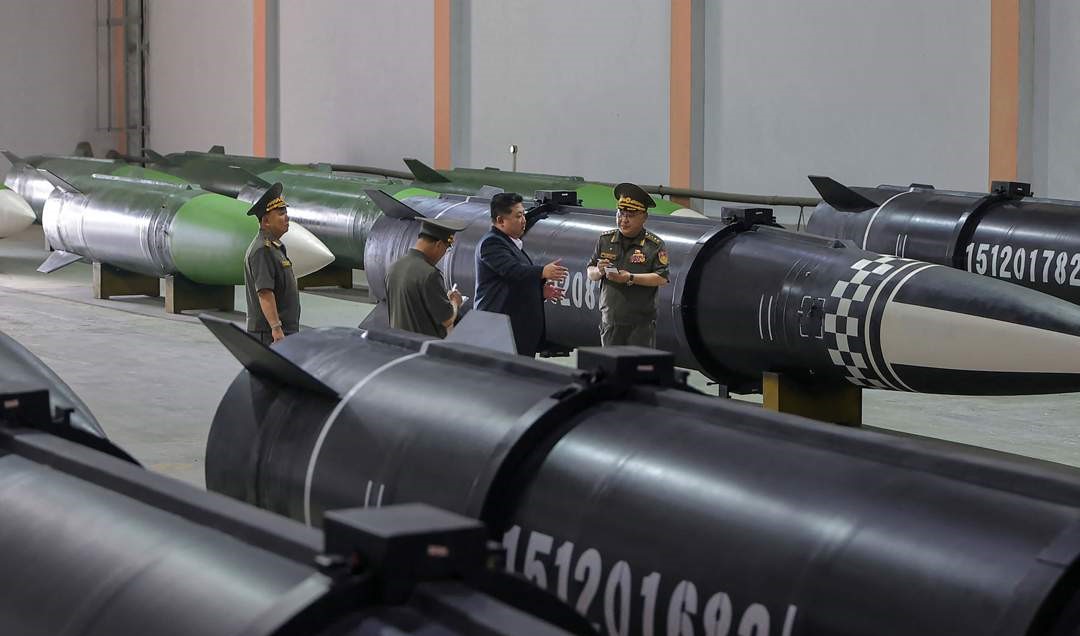
North Korea fired around 10 unidentified ballistic missiles toward the Sea of Japan on Saturday, according to South Korea’s Joint Chiefs of Staff (JCS), escalating regional tensions just days after Pyongyang warned of “terrible consequences” over ongoing military exercises between the United States and South Korea.
The missile launches highlight growing friction on the Korean Peninsula and raise concerns among regional security experts about the potential for further military escalation in Northeast Asia.
What Happened?
South Korea’s military reported that North Korea launched approximately ten ballistic missiles from the Sunan area near Pyongyang, the country’s capital.
The missiles were detected traveling toward the Sea of Japan, also known as the East Sea, where they eventually landed without causing reported damage or casualties.
South Korean defense officials confirmed that the launches appeared to involve short-range ballistic missiles, which are commonly tested by North Korea as part of its expanding missile program.
Military authorities in Seoul immediately began monitoring the situation and coordinating with allies, including the United States and Japan, to analyze the trajectory, range, and technical characteristics of the projectiles.
Why North Korea Launched the Missiles
The latest missile tests appear to be closely linked to the ongoing joint military drills between South Korea and the United States, known as the Freedom Shield exercises.
North Korea has repeatedly criticized these drills, claiming they represent a rehearsal for a potential invasion of its territory.
Earlier this week, Pyongyang warned that the exercises could trigger “serious and terrible consequences,” signaling that the regime might respond with military demonstrations.
Analysts believe the missile launches serve multiple strategic purposes:
- Demonstrating North Korea’s growing missile capabilities
- Sending a warning to the United States and South Korea
- Reinforcing the regime’s military strength domestically
- Testing weapons systems for future deployment
North Korea has long used missile launches as a political and strategic tool to express dissatisfaction with international pressure or military activities in the region.
South Korea’s Military Response
South Korea’s Joint Chiefs of Staff (JCS) confirmed the missile launches shortly after detection and stated that the country’s military has strengthened surveillance and defense readiness.
Officials said they are working closely with U.S. Forces Korea and Japanese defense authorities to monitor additional activity and assess potential threats.
The South Korean military also emphasized that it remains fully prepared to respond to any further provocations from Pyongyang.
In a statement, the JCS said:
“Our military maintains a strong readiness posture while closely cooperating with the United States to monitor North Korea’s activities.”
This coordinated response reflects the long-standing defense alliance between Washington and Seoul.
Reaction From the United States
The United States Indo-Pacific Command said the missile launches did not pose an immediate threat to U.S. territory or allied nations but strongly condemned the actions.
American officials reaffirmed their commitment to defending South Korea and Japan under existing security agreements.
Washington also urged North Korea to cease destabilizing activities and return to diplomatic engagement.
The United States has repeatedly called for dialogue with Pyongyang, though negotiations over North Korea’s nuclear weapons program have largely stalled in recent years.
Japan Monitoring the Situation
Japan’s government also confirmed that the missiles landed outside its Exclusive Economic Zone (EEZ).
The Japanese Prime Minister and defense officials said the government is closely monitoring developments and gathering intelligence in coordination with South Korea and the United States.
Japan has been increasingly concerned about North Korea’s missile capabilities, particularly because many of the weapons tested by Pyongyang have the range to reach Japanese territory.
Tokyo has been strengthening its missile defense systems and expanding its military readiness in response to the growing threat.
Growing Concerns Over North Korea’s Weapons Program
North Korea has significantly accelerated its missile testing program in recent years, conducting dozens of launches that include both short-range and intercontinental ballistic missiles (ICBMs).
Experts believe the country is working toward developing missiles capable of delivering nuclear warheads to distant targets, including the United States.
Despite heavy international sanctions, the North Korean government continues to invest heavily in military technology.
The regime views its nuclear and missile capabilities as essential for national defense and political leverage.
Security analysts warn that continued testing increases the risk of miscalculation or accidental escalation in an already volatile region.
Diplomatic Efforts Remain Stalled
Efforts to restart diplomatic talks between North Korea and the international community have largely stalled since negotiations collapsed several years ago.
Previous discussions aimed at limiting North Korea’s nuclear weapons program in exchange for sanctions relief failed to produce lasting agreements.
Since then, Pyongyang has focused on strengthening its military capabilities while maintaining a confrontational stance toward the United States and its allies.
Regional experts say renewed diplomatic engagement is critical to reducing tensions, but political conditions on all sides make negotiations difficult.
Global Security Implications
North Korea’s missile tests often have broader implications beyond the Korean Peninsula.
They can influence global security dynamics, affect international sanctions policies, and shape military planning in the Asia-Pacific region.
Countries across the world closely monitor such developments because they highlight ongoing challenges related to nuclear proliferation and regional stability.
International organizations and governments frequently call for restraint and dialogue whenever North Korea conducts missile tests.
What Happens Next?
Following the latest launches, analysts expect the situation to remain tense in the coming weeks.
North Korea may conduct additional missile tests or military demonstrations, particularly while the U.S.–South Korea joint drills continue.
Meanwhile, South Korea, Japan, and the United States are expected to maintain heightened surveillance and military readiness.
Diplomatic observers will also be watching closely to see whether the situation leads to renewed calls for negotiations or further international sanctions.
Conclusion
The latest missile launches by North Korea represent another significant moment in the ongoing security tensions surrounding the Korean Peninsula.
While the missiles landed harmlessly in the Sea of Japan, the tests underscore Pyongyang’s determination to advance its military capabilities despite global criticism and sanctions.
As regional powers continue monitoring the situation, the world will be watching closely for any signs of escalation or opportunities for renewed diplomatic dialogue.