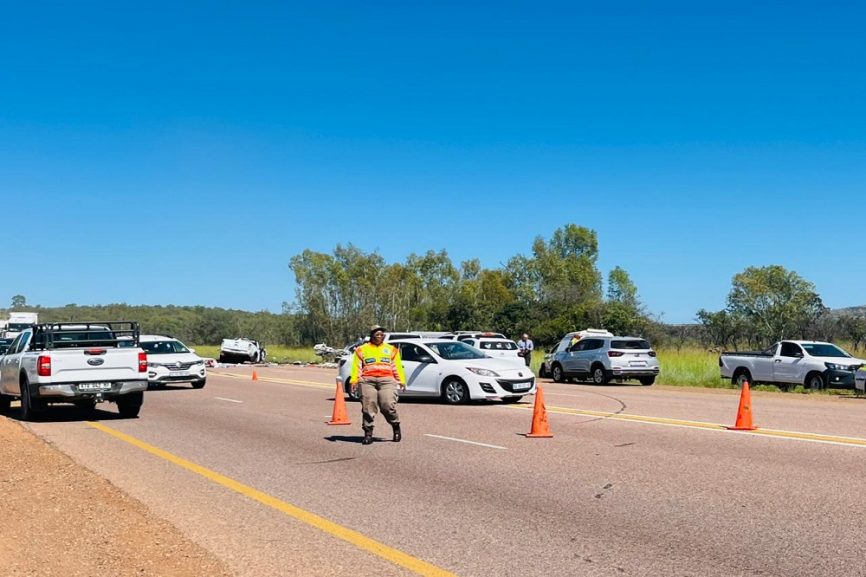
A tragic N1 accident in Limpopo province has resulted in the deaths of five մարդիկ, causing significant traffic disruption on a key national route in South Africa. The collision, which occurred between Modimolle and Mokgopong on Wednesday morning, forced authorities to close the road temporarily before reopening one lane to ease congestion.
The incident has created major delays for commuters and freight transporters who rely on the N1 as a vital economic and travel corridor.
What Happened on the N1?
The fatal N1 accident took place during the early morning hours, involving multiple vehicles on a busy stretch of highway in Limpopo. Emergency services confirmed that five people lost their lives at the scene due to the severity of the crash.
The impact of the collision led to extensive vehicle damage, prompting authorities to shut down both lanes initially. This allowed rescue teams to safely carry out recovery operations and attend to any injured individuals.
After several hours, officials managed to reopen one lane, allowing controlled traffic flow through the affected area.
Traffic Chaos and Delays
The N1 accident quickly led to severe traffic congestion, with long queues forming on both sides of the highway. Motorists reported being stuck for extended periods as emergency responders worked at the scene.
Key traffic impacts included:
- Complete standstill immediately after the crash
- Long delays stretching several kilometers
- Slow-moving traffic even after partial reopening
- Increased travel times for commercial vehicles
The N1 route is a crucial link for transport and logistics in South Africa, meaning disruptions can have ripple effects beyond the immediate area.
Emergency Services Response
Emergency teams responded swiftly to the N1 accident, with multiple units dispatched to manage the crisis. Their operations focused on:
- Providing urgent medical care
- Recovering victims from wreckage
- Clearing debris from the highway
- Managing traffic and ensuring safety
The coordination between different response units helped prevent further incidents, especially in heavy traffic conditions.
Investigation Into the Cause
Authorities have launched a formal investigation into the N1 accident to determine what caused the fatal crash. While no official cause has been confirmed yet, investigators are considering several possibilities:
- Driver error or negligence
- Speeding or reckless overtaking
- Fatigue during early morning driving
- Mechanical issues with vehicles
Experts emphasize that early morning hours can be particularly dangerous due to reduced alertness and visibility.
Economic Impact of N1 Disruption
Beyond the immediate tragedy, the N1 accident has also affected economic activity. The highway serves as a key route for transporting goods across provinces.
Disruptions like this can lead to:
- Delayed deliveries
- Increased fuel consumption due to idling traffic
- Missed business deadlines
- Higher operational costs for logistics companies
This highlights how road safety incidents can have broader economic consequences.
Road Safety Concerns
The N1 accident adds to growing concerns about road safety on major highways in South Africa. Limpopo, in particular, has seen multiple serious crashes on the N1 route.
Common risk factors include:
- High traffic density
- Long-distance travel fatigue
- Mixed traffic (heavy trucks and passenger vehicles)
- Speeding
Authorities continue to urge drivers to exercise caution, especially on busy national roads.
Official Response
Traffic authorities have acknowledged the seriousness of the N1 accident and extended condolences to the victims’ families. Officials confirmed that:
- One lane has been reopened to reduce congestion
- Investigations are ongoing
- Additional updates will be provided
They also stressed the importance of responsible driving to prevent similar tragedies in the future.
Public Reaction and Awareness
The N1 accident has triggered widespread reactions from the public, with many expressing frustration over recurring accidents on major highways.
There have been calls for:
- Stronger traffic law enforcement
- Improved road monitoring systems
- Enhanced driver education programs
Public discussions have also focused on the need for stricter penalties for reckless driving.
What Motorists Should Expect
Drivers traveling through the affected stretch between Modimolle and Mokgopong should be prepared for:
- Ongoing delays
- Controlled traffic flow
- Possible further lane closures during cleanup
Authorities recommend considering alternative routes where possible and following all traffic instructions.
What Happens Next?
As investigations into the N1 accident continue, authorities will focus on:
- Clearing remaining debris
- Restoring full traffic flow
- Determining the exact cause of the crash
Updates are expected as officials gather more information and complete their assessments.
Conclusion
The fatal N1 accident in Limpopo, which claimed five lives, has not only caused deep loss but also major disruption on one of South Africa’s most important highways. While one lane has been reopened, the effects of the crash continue to impact commuters and businesses alike.
The incident serves as a critical reminder of the importance of road safety and vigilance, particularly on high-traffic routes like the N1.