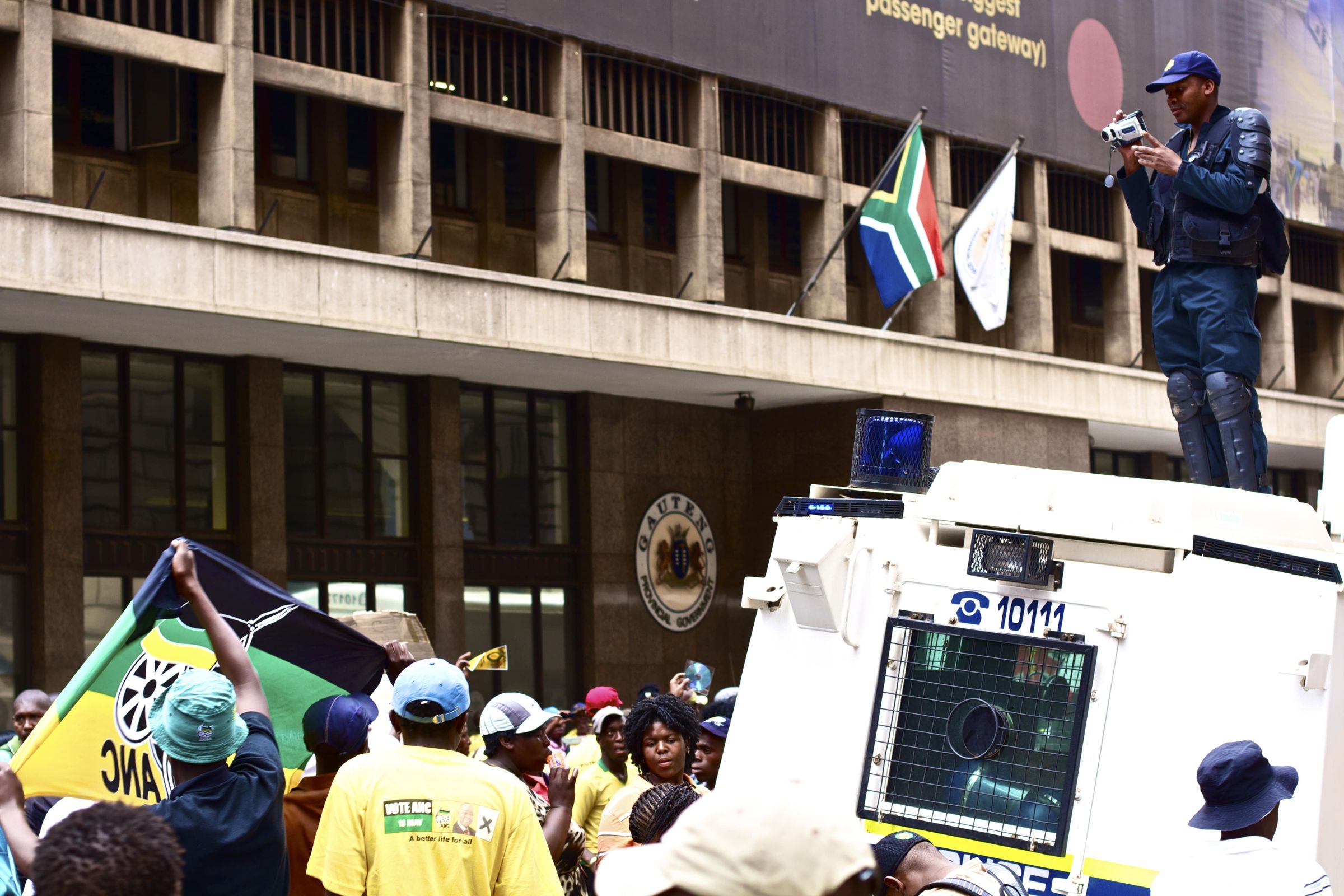
For millions of South Africans, the question after last week’s municipal elections is not who won, but who will now run the cities they depend on. No party holds a majority in many municipalities, including the commercial hub of Johannesburg. Residents face two weeks of coalition bargaining that will determine who delivers their water, their electricity and their basic services.
The African National Congress (ANC), the party of President Cyril Ramaphosa, finished with just over 30 percent of the national vote once all ballots were counted on Sunday. That is a drop of roughly 14 percentage points from its performance in the 2021 local elections. The party now enters talks to form city governments from a weak position.
The result reflects a long-running erosion of public confidence. Voters, the outcome suggests, are increasingly frustrated with corruption and with the party’s failure to tackle unemployment, which tops 34 percent more than three decades after the end of apartheid. Failures in basic services, such as water and electricity, have also contributed to the ANC’s declining vote share in local elections over the past 15 years.
The Democratic Alliance (DA), the ANC’s main rival, took about 25 percent nationally, while former President Jacob Zuma’s uMkhonto weSizwe party won roughly 10 percent, placing third. The remaining ballots were split among hundreds of smaller parties. That fragmentation underscores how difficult the coming negotiations may be.
Nowhere is the stakes-for-residents dimension clearer than in Johannesburg. There the DA led the count with about 35 percent of the votes against 20 percent for the ANC, a result that could give DA veteran Helen Zille a good chance of becoming mayor, depending on the coalition agreements reached. Zille campaigned on fixing potholes and leaking water pipes. For a city where leaking pipes and broken infrastructure are daily realities, the identity of the next mayor carries direct consequences.
The ANC failed to win an outright majority in any of the eight major metro areas, including Johannesburg and Pretoria. Since no party won more than 50 percent of the votes in many cities, the ANC and the DA will have to team up or hash out deals with smaller parties to form municipal governments. Parties have 14 days to negotiate before city councils are formed.
The DA has signalled its terms. In a statement, the party said it would initiate coalition discussions with “political parties that share a commitment to clean and accountable government, rooting out corruption, service delivery for all, the rule of law, and non-racialism”. Those commitments speak directly to the concerns that appear to have driven voters away from the governing party.
Within the ANC, the mood was one of reluctant acknowledgement. ANC Secretary-General Fikile Mbalula called the result “catastrophic” for the party, but said it would not go begging for positions when coalition talks begin soon. “When the people tell us we have fallen short, … the honest answer is not to argue with them but to go home and put our house in order,” Mbalula said on Saturday.
His remarks frame the challenge in terms the party itself has accepted: voters delivered a verdict on performance, and the response, in the secretary-general’s telling, must be internal reform rather than dispute. Whether that translates into better services for residents will depend on the governments that emerge from the negotiations.
For now, the public’s stake lies in the outcome of those talks. The 14-day window will decide who controls the councils responsible for water, electricity and other everyday services in South Africa’s largest cities. With the ANC still the country’s largest party but diminished at the local level, and with smaller parties holding the balance of power in many municipalities, the residents of Johannesburg, Pretoria and other metros will be watching closely as their next governments take shape.