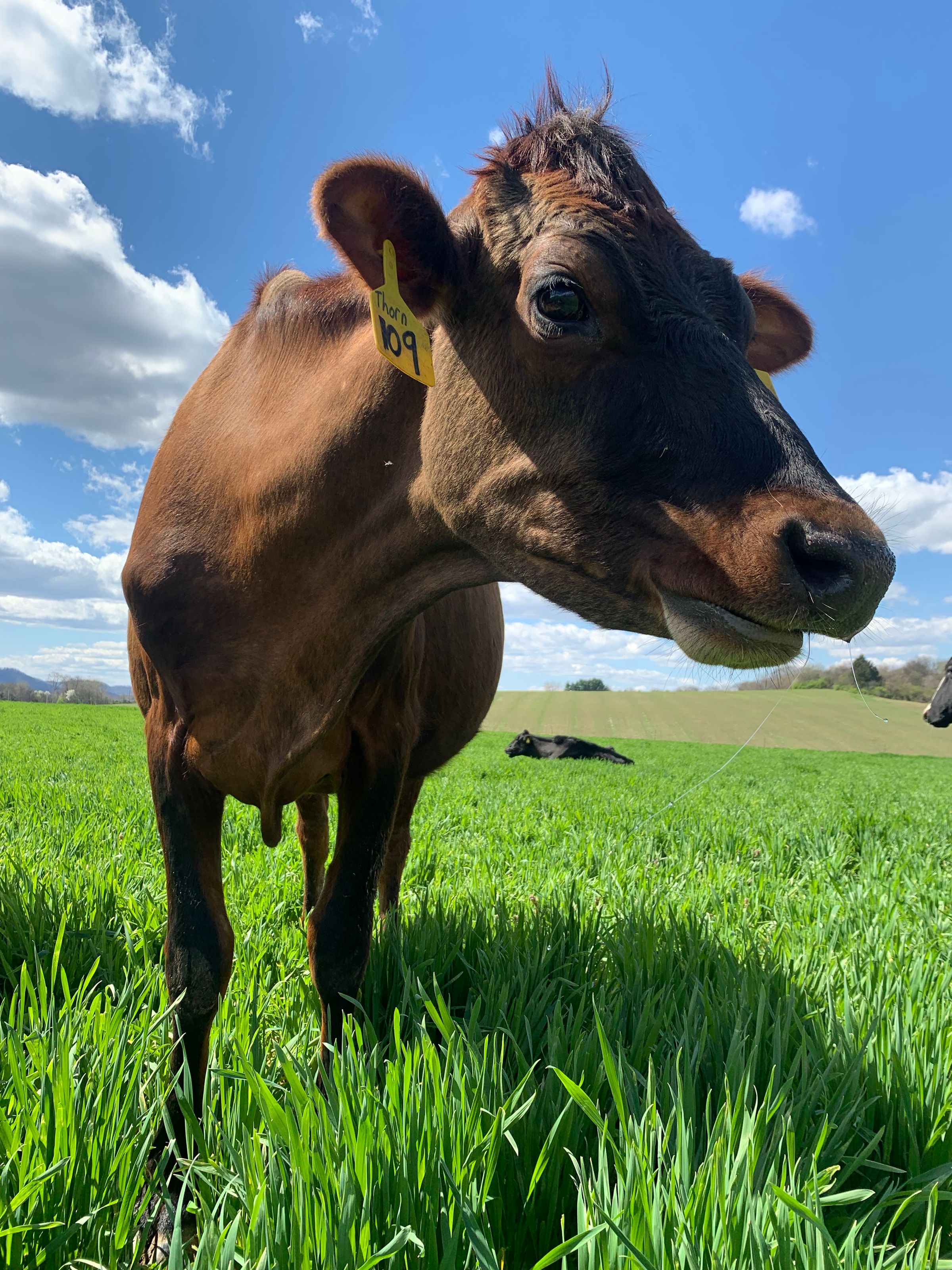
Fewer than 1 700 dairy farmers remained in South Africa by 2016, down from nearly 6 500 in 1999, and a family farm in the Western Cape is showing how the industry might secure its future. Goedgeleë Farm near Protem is home to the country’s second robotic dairy, and the Human family, who run it, see the technology not simply as automation but as an investment in profitable, sustainable milk production with lessons for the wider farming community.
The stakes reach well beyond the farm gate. Milk prices have remained under pressure while production costs continue to climb, conditions that have pushed many farmers out of the industry. For consumers, that trend threatens the long-term availability and affordability of a staple food. The Humans, faced with the same pressures, reached a crossroads: expand and modernise, or leave dairying altogether. Their passion for Jersey cattle decided the outcome, and they chose to build one of the most technologically advanced dairy facilities in the country.
The global context supports their reasoning. The world’s first robotic milking system was installed on a Dutch dairy farm in 1992, and today more than 40 000 dairy farms worldwide use automated milking technology. South African farmers have been slower to embrace it, with Job Legemaat’s pioneering installation near Rayton in 2016 the only one to precede Goedgeleë.
The farm’s story is rooted in a family tradition of innovation. When Pierre Human returned to the family farm after completing his university studies in 1981, his father was farming Red Poll cattle. Pierre established a dairy enterprise and began milking Jerseys in 1983. More than three decades later, his son Pierre-Jacques returned after his own studies, while eldest son Johann had already taken charge of the cropping and sheep enterprises. The family had to decide what role Pierre-Jacques would play, and the decision coincided with one of the most difficult periods in South African dairying.
The planning process alone took almost 10 years. “We first did extensive research to study the world’s leading robotic dairies. We also visited Job Legemaat near Rayton to see his robots in operation,” Pierre recalls. Pierre-Jacques later travelled to the US as part of the World Jersey Cattle Bureau tour, visiting conventional and robotic dairies before continuing to the Netherlands to study leading automated milking systems.
Construction took longer than anticipated because the family insisted on achieving the design they wanted. “We knew exactly what we wanted. If something differed from the specifications, it had to be rebuilt. Looking back, we’re extremely satisfied with the result,” says Pierre-Jacques. Every aspect was designed with longevity and sustainability in mind. Only galvanised steel was used to eliminate corrosion at ground level, and large roof overhangs, added after the original design phase, improve cow comfort while harvesting valuable rainwater in an area where every drop counts. An automated robotic scraper removes manure from the passages into a collection pit; the liquid fraction is recycled as grey water for cleaning, while the solid fraction returns to the fields as organic fertiliser, completing an efficient nutrient cycle.
Today six GEA R9500 robotic milking units, customised to suit the management philosophy of Pierre and Pierre-Jacques, milk more than 360 Jersey cows around the clock. Pierre admits he was initially sceptical. “I didn’t fully understand the technology at first. But I have always believed that if you don’t keep innovating, you’ll eventually fall behind.” He now regards robotic milking as one of the most cow-friendly systems available. “There is minimal human intervention, which reduces stress on the cows and ultimately results in more milk of better quality.”
The welfare benefits are central to the system. Cows choose when they are milked, relieving udder pressure naturally, and the absence of fixed milking times means no herding into holding pens, creating a calmer environment. Each quarter of the udder is milked and monitored individually, improving efficiency and helping identify problems such as mastitis early. The robots continuously track milk yield, quality, activity, feed intake and health, drafting animals needing veterinary treatment or artificial insemination into a special-care area so farmers can intervene quickly. Precision feeding gives each cow an individually formulated ration based on her production level, body condition and nutritional requirements.
“Since installing the robots and introducing precision feeding, the efficiency of the entire operation has improved substantially. That has been our biggest gain,” says Pierre-Jacques.
The barn is divided into four functional areas: resting, feeding, robotic milking and a dedicated special-care section. The system runs entirely on voluntary cow traffic, with a hybrid housing design in which feeding and milking take place under cover while the resting area remains an open paddock without cubicles. Visitors are often struck by the remarkable silence inside the dairy, where cows move quietly at their own pace.
From the control room, Pierre-Jacques monitors production, quality, feed intake, fertility, activity and health in real time, and the software sends SMS notifications alerting the farmer to changes in milk yield, composition or herd health. “There are no fixed milking times. The entire dairy can even be monitored remotely by cell phone or camera,” he says. Remarkably, the entire dairy is operated by only two employees, one overseeing herd administration and the robotic barn, the other responsible for cleaning, maintenance and cow monitoring.
The feeding philosophy, despite the sophisticated technology, remains simple. “We try to stay as close as possible to nature,” says Pierre. Cows receive high-quality roughage grown on the farm and conserved as silage, presented along a feed bunk fitted with Flexi Feed barriers. Pierre even designed the solar-powered feed pusher himself, which moves continuously along the feed alley. Concentrate feeding is managed using Johan Heunis’s Ideal Weight Feeding precision-feeding program.
The highest-producing cows may enter the robots as many as five times a day, producing up to 40ℓ daily, while the average cow visits approximately 3,2 times per day and produces between 12ℓ and 30ℓ. Milk is delivered every second day to Mooivallei Dairy in Bonnievale, and the herd consistently records an exceptionally low somatic cell count of between 80 000 and 100 000 cells/ml, reflecting a high standard of udder health.
Because continuous operation is essential, the farm uses an automatically starting standby generator, with an uninterruptible power supply keeping the computers, vacuum pumps and robotic units running until full backup power takes over. This ensures milking continues uninterrupted even during load-shedding or unexpected outages, a resilience that matters to the reliability of the national milk supply.
“This has been a journey of discovery,” says Pierre. “Everything was new to us. Our system is unique, and it has exceeded even our highest expectations.” By combining exceptional Jersey genetics with world-class automation, the Human family has created what they hope is a blueprint for a future in which technology, sustainability and animal welfare work together to produce better milk and a more resilient dairy business. Whether other South African farmers, under the same cost and price pressures, follow that blueprint may decide how secure the country’s milk supply remains.