Introduction
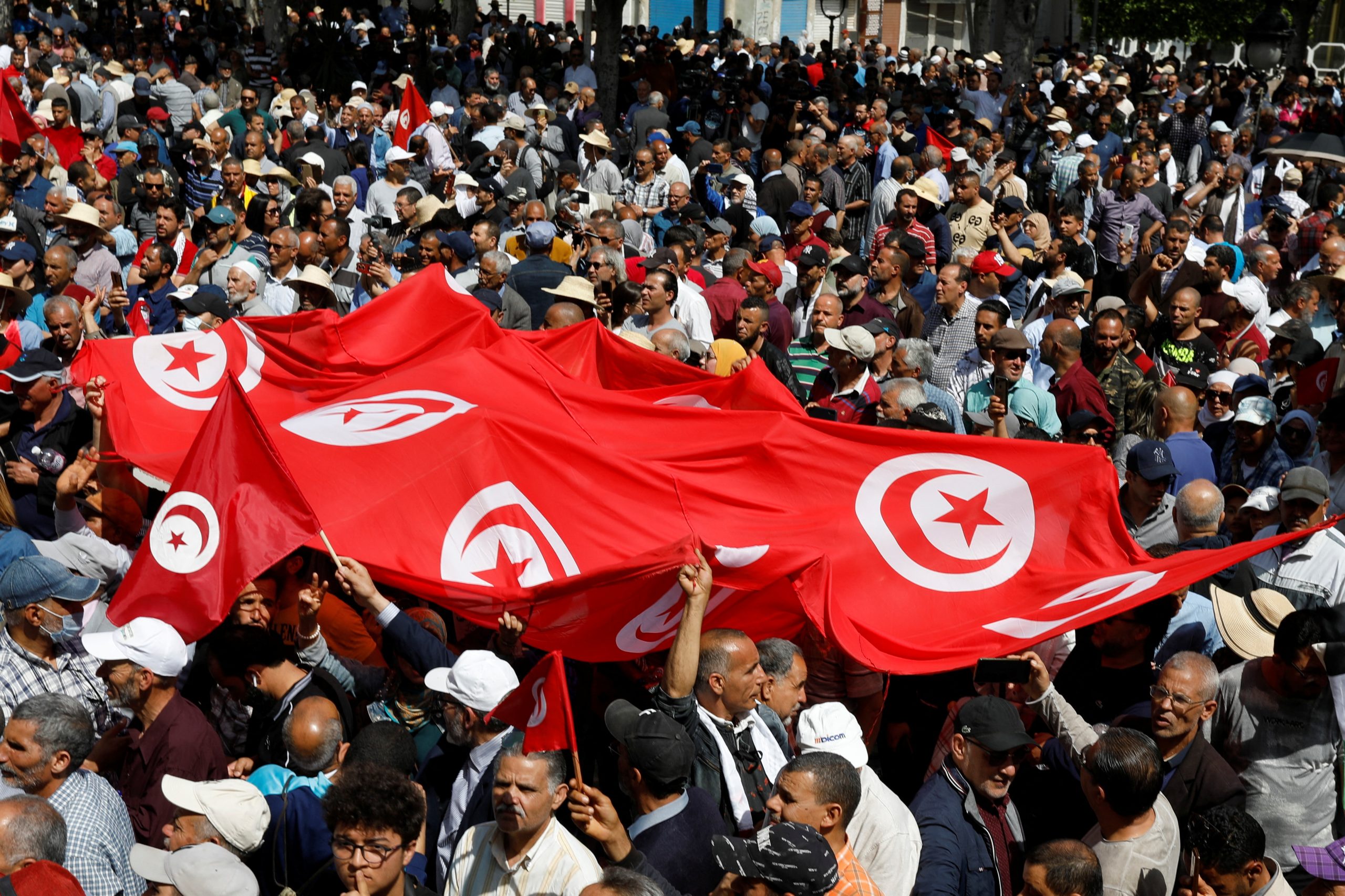
The recent Tunisian Protests have captured global attention, marking a significant moment in the country’s political history. Demonstrations have surged across Tunisia’s streets, with people calling for the restoration of democratic reforms. As frustrations with the current government led by President Kais Saied grow, these protests have evolved into a full-scale movement demanding change. While Tunisia is known for its revolutionary spirit, the latest wave of protests represents not only a fight for democracy but also a challenge to Saied’s increasingly authoritarian rule.
In this article, we delve into the reasons behind the Tunisian Protests, their impact on the country’s political landscape, and the possible implications for Tunisia’s future.
The Roots of the Tunisian Protests
The Tunisian Protests did not emerge overnight; they are the result of years of political instability and economic hardship. The roots of the protests trace back to President Kais Saied’s decision in 2021 to dissolve the parliament and assume sweeping powers. His actions were framed as an attempt to stabilize the country, which was struggling with political gridlock. However, his moves have been viewed by many as a threat to Tunisia’s hard-won democracy, achieved after the 2011 revolution that ousted longtime dictator Zine El Abidine Ben Ali.
Economically, Tunisia has faced numerous challenges, including rising inflation, unemployment, and public dissatisfaction with the government’s handling of these issues. These factors, coupled with the erosion of democratic freedoms, have ignited widespread protests demanding change.
The Key Demands of the Protesters
At the heart of the Tunisian Protests are two major demands: the restoration of democracy and an end to the country’s economic struggles. Protesters are rallying against President Saied’s authoritarian approach, calling for free elections, a return to constitutional governance, and an overhaul of the political system.
Economically, the protesters seek improvements in employment opportunities, better wages, and a reduction in inflation. The high cost of living has become unbearable for many Tunisians, making economic reform one of the central goals of the protest movement.
President Kais Saied’s Response to the Protests
President Kais Saied’s response to the Tunisian Protests has been characterized by force and resistance to public demands. His government has deployed security forces to crack down on protests, using tear gas and arresting demonstrators. Saied has justified his actions by claiming that they are necessary to protect the country from chaos and preserve national security.
Despite this, Saied’s popularity has dwindled, with many viewing his approach as a further consolidation of power rather than a solution to the country’s problems. His response to the protests has raised concerns both within Tunisia and internationally about the future of democracy in the country.
International Reactions to the Tunisian Protests
The Tunisian Protests have drawn reactions from around the world. International organizations, such as Human Rights Watch and Amnesty International, have criticized the government’s crackdown on protests and arrests of political opponents. The United Nations has also called for respect for human rights and the peaceful resolution of political tensions.
Tunisia’s allies, including the European Union and the United States, have expressed concern about the country’s democratic backsliding. While both have urged Saied to engage in dialogue with opposition groups, the international community remains cautious about the potential for violence and instability.
Economic Impact of the Tunisian Protests
The ongoing Tunisian Protests have exacerbated the country’s already fragile economy. With protests disrupting daily life and business operations, the economic situation has worsened. Tourism, one of Tunisia’s key industries, has seen a significant decline due to the unrest, further impacting the national economy.
The protests have also raised concerns about the future of foreign investment in Tunisia. Many international investors are wary of the political instability, which could deter economic growth in the short and medium term. However, some analysts suggest that if Tunisia manages to stabilize its political situation, there could be long-term economic benefits from a renewed focus on democracy and human rights.
The Role of Social Media in the Tunisian Protests
Social media has played a pivotal role in organizing and amplifying the Tunisian Protests. Platforms like Facebook and Twitter have allowed protesters to share their messages, organize marches, and call for international attention to their cause. Social media has also served as a tool for exposing human rights abuses, with videos of protests and police actions quickly going viral.
This has created a new dynamic in Tunisia’s political landscape, as the government faces increased pressure both domestically and internationally. The role of social media highlights the growing influence of digital activism in modern protests and the challenges governments face in controlling public opinion in the digital age.
Potential Outcomes of the Tunisian Protests
The future of the Tunisian Protests is uncertain. If Saied is unwilling to compromise, there is the potential for further political instability. Some fear that the protests could lead to violent clashes between demonstrators and security forces, which would worsen the country’s already fragile security situation.
However, there is also a possibility that these protests could lead to positive change. If the government is forced to listen to the demands of the people, Tunisia may see a return to democratic governance, stronger economic policies, and more effective representation. The outcome will largely depend on the ability of both sides to engage in meaningful dialogue.
How the Tunisian Protests Could Affect the Arab World
The Tunisian Protests are being closely watched by other countries in the Arab world. Tunisia was the birthplace of the Arab Spring in 2011, a series of uprisings that spread across the region. The current protests in Tunisia could have ripple effects throughout the region, potentially inspiring similar movements in countries with repressive governments.
The Arab world is home to a number of authoritarian regimes, and many of these governments are wary of the potential for unrest. The outcome of the Tunisian Protests could either serve as a warning to these regimes or inspire a new wave of democratic movements in the region.
FAQs
What are the main causes of the Tunisian Protests?
The Tunisian Protests are mainly driven by dissatisfaction with President Kais Saied’s authoritarian rule, political repression, and worsening economic conditions, including inflation and unemployment.
How has the Tunisian government responded to the protests?
The government has responded with a crackdown, deploying security forces, using tear gas, and arresting protest leaders to maintain control over the demonstrations.
What is the future of the Tunisian Protests?
The future of the Tunisian Protests is uncertain, with potential outcomes ranging from political compromise and reform to further instability and violence.
Conclusion
The Tunisian Protests have become a critical moment in the country’s political journey. While the movement faces significant challenges, it also represents a chance for Tunisia to reassess its democratic values and work towards a more inclusive political system. The world is watching closely, and the future of Tunisia could have implications not only for its own people but also for the wider Arab world.