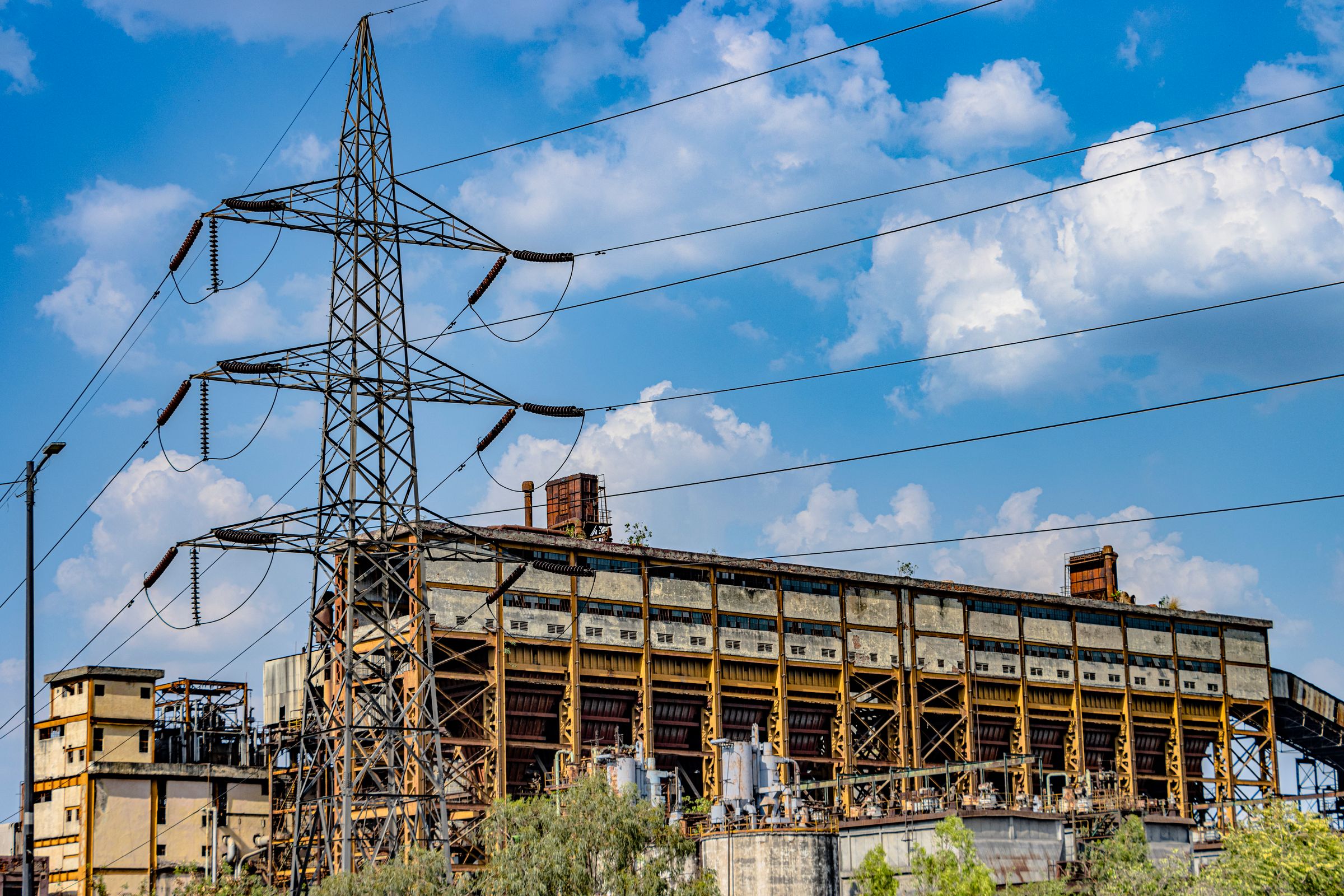
South Africans who endured years of rolling blackouts may be startled to hear that the national utility now has electricity to spare, and that it wants data centres to absorb it. That shift, presented by Eskom and Western Cape leaders at the Africa Tech Festival in Cape Town, carries real consequences for ordinary citizens: for jobs, for tariffs, for the reliability of the grid that households and businesses depend on, and for how the province plans its energy future.
Western Cape Premier Alan Winde addressed an audience at the Onyx hotel across from the Cape Town International Convention Centre, where the festival is taking place. He referred to the City’s planning approval of a data centre on golf course land, which drew strong backlash from residents. That opposition, he argued, “comes from an uninformed position”. He spoke with enthusiasm about what he called the “factories of the future”, positioning the Western Cape as Africa’s tech capital on the strength of early provincial investments in broadband and digital access. The province currently hosts 14 data centres, and he said his government is pursuing “much more investment into many, many more of them”.
For the public, the premier’s central argument is about work. He linked digital infrastructure directly to South Africa’s acute unemployment, saying his party believes in creating the ecosystems and enabling environment that allow businesses to operate, so that “we can actually bring down that unemployment rate and create the jobs that we need to create”. A fuller account of the festival and the utility’s plans can be found at https://www.dailymaverick.co.za/article/2026-11-17-south-africas-data-centre-boom-gets-an-unlikely-boost-from-eskoms-power-surplus/.
Eskom board chair Dr Mteto Nyati, speaking the day before at the World Broadband Association’s annual African conference in the Westin East Ballroom 2, shared that optimism. “We see data [centres] as a great opportunity for Africa. And 70% of those data centres today are here in South Africa,” he said, naming AWS, Microsoft and Google as operators with a local presence, and noting that these facilities will keep growing in size and demand.
The utility’s turnaround is the engine behind this push. Eskom has moved from a supply deficit to an active surplus of 2-3GW. That surplus exists partly because domestic sales fell 6.2% to 178TWh, driven by rising behind-the-meter solar power (estimated at 9.1GW nationally), efficiency gains, smelter curtailments and the closure of the Mozal aluminium smelter. Rather than switching power off, Eskom urgently needs new baseload buyers to protect revenues and avoid penalties on take-or-pay primary coal contracts. Data centres have been identified as a primary strategic customer group, and the utility’s distribution division and group executive have embedded data centre connection pipelines into a formal demand-activation strategy meant to stabilise medium-term sales at 178TWh and grow beyond that figure.
Nyati pointed to Eskom’s generation fleet, more than 47-48GW of nominal capacity across 31 power stations, as an unmatched base for energy-intensive workloads that neighbouring regions cannot support. His projections showed global data centre electricity demand set to expand 2.3 times to 945TWh, while African demand grows from 2.5TWh to roughly 6.8TWh, a low baseline representing rapid compound growth driven by broadband and mobile penetration. To prospective investors he was blunt: “If you guys can grow and continue to grow, we have the energy for you. We are looking for that growth.”
The utility’s finances have strengthened in ways that matter for taxpayers and tariff payers. Eskom reported a net profit after tax of R30.3-billion for FY2026, up from R14-billion in FY2025, with operating profit of R108.6-billion, helped by a 62% drop in expensive diesel open-cycle gas turbine usage that saved R10.6-billion. Liquid cash holdings reached R124.9-billion, and both S&P Global and Fitch issued credit rating upgrades. A ring-fenced renewables subsidiary, Eskom Green, launched on 9 June with an initial pipeline of 17 projects targeting 6GW of carbon-free electricity by FY2030 and 32GW by FY2040, offering corporate data centre clients direct, off-balance-sheet green-power purchase agreements.
Winde, by contrast, has his own plans. The provincial government has instituted a 5.7GW energy plan, with in-province generation capacity already at nearly 2GW. “We use 4,000 megawatts from Eskom, and so we are almost at 50% of our usage,” he said, citing California as his benchmark. He argued that global technology firms demand low-carbon operations, giving provinces with renewable and nuclear power a competitive edge, though the Palmiet pumped hydro scheme and Koeberg nuclear reactors are Eskom assets.
Nyati candidly acknowledged past missteps, insisting that plant breakdowns were operational rather than structural. “Eskom is an engineering firm that used to be managed as an engineering firm, following standard operating procedures. Unfortunately, we have taken our eyes off that ball. But come back now, we are able to provide energy security for South Africa. That is something that is behind us now.” What lies ahead, both leaders suggest, is power for the factories of the future, and the question for citizens is whether it delivers the jobs and tariff relief promised alongside it.